Bill · H.R. 1446· House(119-HR-1446)
Validate Prior Learning to Accelerate Employment Act
- Introduced
- 2/21/2025
- Last activity
- 2/21/2025 — Referred to the House Committee on Education and Workforce.
- Sponsored by
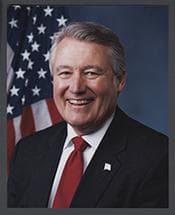
- Rick Allen
- Cosponsors
- - 1 - 0
- Introduced
- In Committee
What this bill would do
This bill, known as the "Validate Prior Learning to Accelerate Employment Act," aims to amend the Workforce Innovation and Opportunity Act. It focuses on creating and using assessments to measure the knowledge, skills, and experiences of adults and dislocated workers. These assessments would be developed through coordination between states and various industry and educational entities. The goal is to allow individuals to earn recognized credentials or college credit based on their existing abilities. Additionally, the bill promotes skills-based hiring practices and individual employment plans to help people secure jobs in in-demand sectors.
Yes· 3 of 14
Would households on low incomes be better off under this?+5
By providing paths to credentials and employment without strict degree requirements, it aids those seeking economic mobility.
Is this likely to create jobs?+5
The bill promotes skills-based hiring and career advancement to help workers secure employment in in-demand sectors.
Does this make college cost less?+5
The bill allows individuals to earn college credit through assessments of prior learning, potentially reducing educational costs.
The opposite
No question was scored the opposite.
Who it would affect, and how
Potential Positive Impacts for People
-
Earning Credentials and Credit: Adults and dislocated workers can receive recognized postsecondary credentials or college credit based on their proven knowledge and skills rather than just traditional schooling (Section 2(a)(2)(B)(vii)(I)).
-
Better Job Planning: The bill helps individuals create employment plans that identify specific industries where their current skills fit and highlight exactly what upskilling is needed to get hired (Section 2(a)(2)(B)(vii)(II)).
-
Improved Job Applications: Individuals can use these assessments to build skills-based resumes, profiles, or portfolios to better communicate their abilities to employers (Section 2(a)(2)(B)(vii)(III)).
-
Easier Hiring Processes: Employers are supported in moving toward skills-based hiring, which serves as an alternative to requiring a postsecondary degree (Section 2(b)(xv)).
-
Career Advancement: Local training activities can use these assessments to determine if a person can accelerate their path to economic self-sufficiency or career growth (Section 2(c)(2)(A)(iii)).
Potential Negative Impacts for People
- No specific negative impacts or burdens are explicitly stated in the provided text.
Groups and Interests Ranking
Every group the model scored this bill for, from -10 to +10. Hover a score for the reason it gave.
- Demographic And Interest Groups
- Good For Low Income Households+5Good For Middle Aged+4Good For Students+4Good For Business Owners+3Good For Middle Class Households+3Good For Veterans+3Good For Young Adults+3Good For Immigrants+2
- Economy And Finance
- Increases Job Creation+5Improves Economic Growth+3Improves Small Business Support+3
- Education And Technology
- Improves College Affordability+5
- Social Issues And Justice
- Improves Poverty Reduction+4
- National Security And Foreign Policy
- Improves Veterans Benefits+2
- 4/8/2025
- 1 Cosponsor added.
- 2/21/2025
- Referred to the House Committee on Education and Workforce.
- Introduced in House
 Elise Stefanik
Republican · New York