Bill · H.R. 1434· House(119-HR-1434)
Strengthening Communities through Summer Employment Act
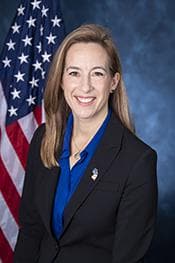
- Introduced
- 2/18/2025
- Last activity
- 2/18/2025 — Referred to the House Committee on Education and Workforce.
- Sponsored by
- Mikie Sherrill
- Cosponsors
- - 1 - 1
- Introduced
- In Committee
What this bill would do
The Strengthening Communities through Summer Employment Act aims to fund summer youth employment programs to expand subsidized job opportunities for young people. The bill provides authorization for appropriations through fiscal year 2030 to the Secretary of Labor. These funds are intended to improve academic, economic, and criminal justice outcomes for participants. Grants will be awarded to develop or expand programs and to implement innovative program activities. The Act also establishes an Advisory Board to assist the Secretary and mandates impact evaluations of the funded programs.
Yes· 3 of 12
Would people in their twenties and thirties be better off under this?+8
The bill provides direct job opportunities, skill training, and mentorship for those under 25.
Would households on low incomes be better off under this?+6
The bill provides financial assistance for food, shelter, and transportation to help low-income youth participate.
Would children be better off under this?+5
The bill targets youth under the age of 25 with employment and support services.
The opposite
No question was scored the opposite.
Who it would affect, and how
Potential Positive Impacts for People
-
Improved Youth Outcomes: The bill aims to improve high school graduation rates, postsecondary enrollment, employment and wage rates, and reduce arrest, conviction, and incarceration rates (Section 3(a)).
-
Guaranteed Wages and Employment: Participants under the age of 25 will receive subsidized employment for at least 4 weeks and will be paid at least the higher of the applicable Federal, State, or local minimum wage (Section 3(d)(1)-(2)).
-
Comprehensive Support Services: Programs must provide coaching, mentoring, and assistance in obtaining future educational or employment opportunities (Section 3(d)(5)-(6)).
-
Skill Development: Participants can access training in digital literacy, work-readiness, financial literacy, and specific job training (Section 3(d)(8)).
-
Targeted Support for High-Need Areas: Grant prioritization will favor entities serving areas with higher youth unemployment and violent crime rates (Section 3(b)(1)).
-
Innovative Approaches: Funds can be used for specialized supports such as individualized mentoring, social-emotional learning, wrap-around financial assistance for food and shelter, and mental health or substance abuse supports (Section 4(d)).
Potential Negative Impacts for People
- No explicit negative impacts are detailed in the text provided.
Groups and Interests Ranking
Every group the model scored this bill for, from -10 to +10. Hover a score for the reason it gave.
- Demographic And Interest Groups
- Good For Young Adults+8Good For Low Income Households+6Good For Children+5Good For Rural Residents+4
- Economy And Finance
- Increases Minimum Wage+5Improves Economic Growth+4
- Social Issues And Justice
- Improves Poverty Reduction+5Improves Criminal Sentencing Reform+3
- Education And Technology
- Improves College Affordability+4Improves Internet Access+3
- Healthcare
- Improves Mental Health Access+5
- Governance And Ideology
- Improves Government Transparency+3
- 4/7/2025
- 1 Cosponsor added.
- 2/18/2025
- Referred to the House Committee on Education and Workforce.
- 1 Cosponsor added.
- Introduced in House
 Brian Fitzpatrick
Republican · Pennsylvania
 William Keating
Democrat · Massachusetts