Bill · H.R. 1392· House(119-HR-1392)
Improving Mental Healthcare in the Re-Entry System Act of 2025
- Introduced
- 2/14/2025
- Last activity
- 2/14/2025 — Referred to the House Committee on the Judiciary.
- Sponsored by
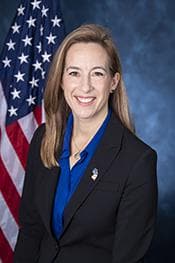
- Mikie Sherrill
- Cosponsors
- None
- Introduced
- In Committee
What this bill would do
This bill establishes a grant program to fund mental health screenings and provider referrals for people in the detention system. The Attorney General will oversee a program that provides funding to the Bureau of Prisons, States, and localities. This includes the creation of an Advisory Board to manage implementation and evaluate program impact. The program requires the administration of a brief mental health survey to individuals at intake or currently incarcerated. Successful applicants must also utilize outreach teams to connect individuals with local mental healthcare providers. Finally, the act mandates rigorous research to measure the long-term effectiveness of these interventions.
Yes· 3 of 12
Does this make mental health care easier to get?+8
The bill provides significant funding to establish screenings and referrals for individuals in the detention system.
Does this make health care easier to get in general?+5
By facilitating referrals to local providers, the bill improves access to care for specialized populations.
Would people with disabilities be better off under this?+5
The bill specifically targets those with severe mental illnesses through specialized outreach and screening.
The opposite
Does this protect people from being watched or searched?-3
The bill mandates the collection of personal mental health data and sharing it for research purposes.
Does this give people more control over their personal data?-3
The bill requires sharing sensitive data regarding participation and criminal history with research organizations.
Does this give the government more power to monitor people inside the country?-2
The bill requires collecting and sharing personal data regarding individuals' participation in the program and their criminal history.
Who it would affect, and how
Potential Positive Impacts for People
-
Improved Access to Mental Healthcare: The bill funds the implementation of mental health screenings and provides referrals to local providers to help individuals access care before or after leaving a detention center (Section 2(a)).
-
Identification of Severe Illnesses: The required brief mental health screening survey is designed to identify severe mental illnesses such as schizophrenia, bipolar disorder, and major depression (Section 2(f)(3)).
-
Dedicated Support through Outreach: The establishment of an outreach team allows for direct contact with individuals to help them re-establish ties with mental health providers (Section 2(e)(4)).
-
Targeted Assistance for High-Need Individuals: Outreach teams are tasked with contacting individuals who indicate they have severe mental illness through their survey responses (Section 2(e)(4)).
-
Long-term Impact Monitoring: The program includes requirements for impact evaluations to track crime rates, employment, and wage rates over periods of one, three, five, and ten years (Section 5(b)(1)).
Potential Negative Impacts for People
-
Intrusive Contact Requirements: Outreach team members are required to make multiple contact attempts, which may include attempting to contact an individual in person at their place of residence if telephone contact is unsuccessful (Section 2(g)(3)(A)).
-
Mandatory Data Sharing: To be eligible for a grant, States or localities must partner with research organizations and share relevant data regarding individuals' participation in the program and their arrest, arraignment, and incarceration rates (Section 2(d)(3)).
Groups and Interests Ranking
Every group the model scored this bill for, from -10 to +10. Hover a score for the reason it gave.
- Healthcare
- Improves Mental Health Access+8Improves Healthcare Access+5Increases Research Funding+4
- Social Issues And Justice
- Improves Disability Rights+3Reduces Homelessness+3Improves Poverty Reduction+2
- Demographic And Interest Groups
- Good For People With Disabilities+5Good For Low Income Households+2
- Governance And Ideology
- Increases Federal Power+3Improves Government Transparency+2Improves Privacy Rights-3
- National Security And Foreign Policy
- Increases Domestic Surveillance-2
- Economy And Finance
- Improves Economic Growth+1
- Education And Technology
- Increases Scientific Research Funding+4Improves Data Privacy-3
- 2/14/2025
- Referred to the House Committee on the Judiciary.
- Introduced in House