Bill · H.R. 136· House(119-HR-136)
Veteran Overmedication and Suicide Prevention Act of 2025
- Introduced
- 1/3/2025
- Last activity
- 2/3/2025 — Referred to the Subcommittee on Health.
- Sponsored by
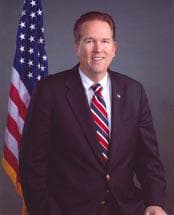
- Vern Buchanan
- Cosponsors
- - 1 - 4
- Introduced
- In Committee
What this bill would do
This bill, known as the "Veteran Overmedication and Suicide Prevention Act of 2025," directs the Secretary of Veterans Affairs to conduct an independent review of certain veteran deaths. The Secretary is required to seek an agreement with the National Academies of Sciences, Engineering, and Medicine to review deaths by suicide, violence, or accident over a five-year period. This review includes analyzing medication use, medical diagnoses, and staffing levels for mental health professionals. The goal is to examine patterns related to prescriptions and the effectiveness of non-medication treatments. Finally, the Secretary must submit the results of this review to Congress and make the report available to the public.
Yes· 3 of 4
Would veterans be better off under this, taking everything together?+6
The bill aims to improve veteran safety by analyzing medication use, suicide patterns, and mental health staffing levels.
Does this increase the pay, pensions or support veterans receive?+6
The bill seeks to improve veteran safety and well-being through an independent review of deaths by suicide, violence, and accidents.
Does this make mental health care easier to get?+5
The bill directs an assessment of staffing levels and efforts to increase the representation of mental health counselors and therapists.
The opposite
No question was scored the opposite.
Who it would affect, and how
Potential Positive Impacts for People
-
Enhanced understanding of veteran deaths: By conducting a review of deaths by suicide, violence, and accidents, the Department can better understand the circumstances surrounding these tragedies (Section 2(a)(1), Section 2(a)(2)(A-C)).
-
Improved medication safety oversight: The review requires a comprehensive list of medications, including those with black box warnings or those prescribed for off-label use, which could help identify risks in prescribing practices (Section 2(a)(2)(E)).
-
Focus on treatment alternatives: The bill looks at the use of non-medication first-line treatments compared to medication-only treatments, which may help improve how conditions like PTSD or traumatic brain injury are addressed (Section 2(a)(2)(I)).
-
Mental health workforce improvements: The review includes an assessment of staffing levels, hiring guidelines, and the creation of an occupational series for counselors and therapists to help ensure appropriate mental health support (Section 2(a)(2)(M)).
-
Improved data sharing and coordination: The analysis includes how the Department coordinates with State Medicaid agencies and outside prescribers to prevent overprescription (Section 2(a)(2)(P)).
Potential Negative Impacts for People
- No specific negative impacts are explicitly stated in the text provided.
Groups and Interests Ranking
Every group the model scored this bill for, from -10 to +10. Hover a score for the reason it gave.
- Demographic And Interest Groups
- Good For Veterans+6
- National Security And Foreign Policy
- Improves Veterans Benefits+6
- Healthcare
- Improves Mental Health Access+5
- Governance And Ideology
- Improves Government Transparency+4
- 1/7/2026
- 1 Cosponsor added.
- 10/21/2025
- 1 Cosponsor added.
- 9/2/2025
- 1 Cosponsor added.
- 2/5/2025
- 1 Cosponsor added.
- 2/3/2025
- Referred to the Subcommittee on Health.
- 1/3/2025
- Referred to the House Committee on Veterans' Affairs.
- 1 Cosponsor added.
- Introduced in House
 Gerald Connolly
Democrat · Virginia
 Joe Neguse
Democrat · Colorado
 Paul Tonko
Democrat · New York
 Jefferson Van Drew
Republican · New Jersey
 Eugene Vindman
Democrat · Virginia