Bill · H.R. 1350· House(119-HR-1350)
DOE and NSF Interagency Research Act
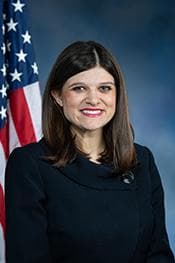
- Introduced
- 2/13/2025
- Last activity
- 3/25/2025 — Received in the Senate and Read twice and referred to the Committee on Commerce, Science, and Transportation.
- Sponsored by
- Haley Stevens
- Cosponsors
- - 1 - 1
- Introduced
- Passed House
- In Senate committee
What this bill would do
The DOE and NSF Interagency Research Act directs the Secretary of Energy and the Director of the National Science Foundation to coordinate research and development activities. These two agencies will work together to advance their shared mission requirements and priorities. This coordination will be managed through a memorandum of understanding or other interagency agreement. The agencies can engage in various research areas, including plasma science, quantum information, and advanced manufacturing. They are also empowered to support research infrastructure and workforce development. Finally, the agencies must submit a detailed report on their coordination efforts to relevant House and Senate committees.
Yes· 3 of 11
Does this put more money into scientific research?+6
The bill explicitly coordinates and promotes various high-level scientific research areas.
Would students be better off under this?+5
The bill specifically targets STEM education, internships, and project-based learning for students.
Does this put more money into wind, solar and other renewable power?+5
The act targets research in solar fuels, fusion, and energy materials science.
The opposite
No question was scored the opposite.
Who it would affect, and how
Potential Positive Impacts for People
-
Educational and Career Growth: The bill allows for the organization of education, training, and research initiatives, which include internships, fellowships, and project-based learning for students, as well as professional development for educators and researchers (Section 2(c)(4)).
-
Expanded Research Opportunities: The act establishes a competitive, merit-reviewed process that allows Federal agencies, National Laboratories, institutions of higher education, and non-profit institutions to apply for collaborative research opportunities (Section 2(b)).
-
Technological Advancement: The coordination covers a wide range of scientific fields such as artificial intelligence, quantum computing, and advanced manufacturing, which can lead to advancements in energy and climate optimization (Section 2(c)(1)).
-
Collaborative Access: The bill promotes open community-based development and information sharing by providing necessary access and secure data transfer capabilities between different entities (Section 2(c)(2)).
Potential Negative Impacts for People
- No specific negative impacts or burdens are explicitly mentioned in the provided text.
Groups and Interests Ranking
Every group the model scored this bill for, from -10 to +10. Hover a score for the reason it gave.
- Demographic And Interest Groups
- Good For Students+5Good For Young Adults+4
- Environment Energy And Infrastructure
- Increases Renewable Energy Investment+5Reduces Carbon Emissions+4
- Economy And Finance
- Improves Economic Growth+4Increases Job Creation+3
- Education And Technology
- Increases Scientific Research Funding+6
- Governance And Ideology
- Improves Government Transparency+3Increases Federal Power+2
- Healthcare
- Increases Research Funding+5
- National Security And Foreign Policy
- Improves Cybersecurity Defense+5
- 3/25/2025
- Received in the Senate and Read twice and referred to the Committee on Commerce, Science, and Transportation.
- 3/24/2025
- Motion to reconsider laid on the table Agreed to without objection.
- Passed/agreed to in House: On motion to suspend the rules and pass the bill Agreed to by voice vote. (text: CR H1205-1206)
- On motion to suspend the rules and pass the bill Agreed to by voice vote. (text: CR H1205-1206)
- DEBATE - The House proceeded with forty minutes of debate on H.R. 1350.
- Considered under suspension of the rules. (consideration: CR H1205-1207)
- Mr. Babin moved to suspend the rules and pass the bill.
- 2/25/2025
- 1 Cosponsor added.
- 2/13/2025
- Referred to the House Committee on Science, Space, and Technology.
- 1 Cosponsor added.
- Introduced in House
 James Baird
Republican · Indiana
 Sarah McBride
Democrat · Delaware