Bill · H.R. 1279· House(119-HR-1279)
To amend title XIX of the Social Security Act to establish a community engagement requirement for certain individuals under the Medicaid program.
- Introduced
- 2/13/2025
- Last activity
- 2/13/2025 — Referred to the House Committee on Energy and Commerce.
- Sponsored by
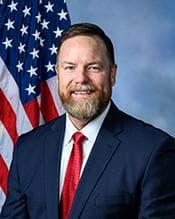
- Aaron Bean
- Cosponsors
- - 4 - 0
- Introduced
- In Committee
What this bill would do
This bill proposes to amend the Social Security Act to create a community engagement requirement for certain Medicaid recipients. It targets "applicable individuals" who are between the ages of 18 and 65 and not exempt by specific circumstances. To meet the requirement, individuals must complete at least 80 hours of work, community service, or a work program per month. Federal funding for medical assistance may be reduced if an individual fails to meet these requirements for three or more months in a calendar year. Additionally, states are given the option to disenroll individuals who do not meet these standards.
Yes
Does this reduce what the federal government spends?+1
The bill may reduce federal spending by limiting financial participation for non-compliant Medicaid recipients.
Does this leave more decisions to the states?+1
The bill gives states the option to disenroll individuals who do not meet engagement requirements.
The opposite· 3 of 6
Would households on low incomes be better off under this?-4
The bill may negatively impact low-income households by creating barriers to maintaining Medicaid coverage.
Does this make health care easier to get in general?-4
The requirement of work or community service could result in the loss of healthcare coverage for non-compliant individuals.
Does this put more money into Medicaid, the health coverage for people on low incomes?-3
The bill creates mechanisms that could reduce federal funding for Medicaid due to non-compliance with engagement requirements.
Who it would affect, and how
Potential Positive Impacts for People
-
Exemptions for Vulnerable Groups: The bill provides that certain individuals do not have to meet the engagement requirement, which includes people under 18, over 65, those who are pregnant, or those who are the parent or caretaker of a dependent or incapacitated person (Section 1(b)(1)(A)).
-
Health and Wellness Support: Individuals participating in a drug or alcohol treatment and rehabilitation program are considered exempt from the requirement (Section 1(b)(1)(A)(vii)).
-
Support for Students: People enrolled in an educational program at least half time are exempt from the engagement requirement (Section 1(b)(1)(A)(viii)).
-
Medical Protections: Individuals who are determined to be physically or mentally unfit for employment by a medical professional are exempt from the requirement (Section 1(b)(1)(A)(ii)).
-
Efficient Verification: To reduce the burden on the individual, the bill states that State Medicaid agencies should prioritize using existing databases and reliable information sources for verification whenever possible (Section 1(b)(1)(2)).
Potential Negative Impacts for People
-
Financial Impact on Medicaid Funding: Federal financial participation may not be available for medical assistance provided to an individual if they fail to meet the engagement requirement for three or more months in a year (Section 1(a)(3)).
-
Risk of Losing Coverage: States have the option to disenroll an applicable individual for a month if the requirements are not met (Section 1(c)).
-
Strict Time and Income Requirements: To satisfy the engagement requirement, individuals must meet specific thresholds, such as working 80 hours or earning income equal to the Federal minimum wage multiplied by 80 hours (Section 1(b)(1)(A)).
Groups and Interests Ranking
Every group the model scored this bill for, from -10 to +10. Hover a score for the reason it gave.
- Demographic And Interest Groups
- Good For Low Income Households-4Good For Middle Aged-2Good For Young Adults-2
- Healthcare
- Improves Healthcare Access-4Increases Medicaid Funding-3
- Social Issues And Justice
- Improves Poverty Reduction-2
- Economy And Finance
- Reduces Government Spending+1
- Governance And Ideology
- Increase States Rights+1
- 2/18/2025
- 1 Cosponsor added.
- 2/13/2025
- Referred to the House Committee on Energy and Commerce.
- 3 Cosponsors added.
- Introduced in House
 Scott Franklin
Republican · Florida
 Harriet Hageman
Republican · Wyoming
 Mike Kennedy
Republican · Utah
 Randy Weber
Republican · Texas