Bill · H.R. 1261· House(119-HR-1261)
Land and Water Conservation Fund Water Amendments Act of 2025
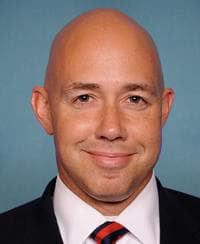
- Introduced
- 2/12/2025
- Last activity
- 2/12/2025 — Referred to the House Committee on Natural Resources.
- Sponsored by
- Brian Mast
- Cosponsors
- None
- Introduced
- In Committee
What this bill would do
This bill, known as the "Land and Water Conservation Fund Water Amendments Act of 2025," aims to amend title 54 of the United States Code. It seeks to authorize the Secretary of the Interior to provide financial assistance to States for water quality projects through the Land and Water Conservation Fund. The legislation would require States to include specific water quality information within their statewide outdoor recreation plans. It also defines what qualifies as a water quality project and establishes limitations on how funds can be used. Additionally, the Secretary would be required to consult with the EPA Administrator when providing this assistance.
Yes· 3 of 4
Does this better protect air, water and wildlife?+5
The bill authorizes financial assistance for water quality projects like restoring wetlands and marshes to improve natural water systems.
Does this better protect public land such as parks and forests?+3
It enhances land management by providing funds to restore impaired water bodies through natural hydrological features.
Does this leave more decisions to the states?+2
It provides states with financial assistance and credits for their own water quality project funding.
The opposite
No question was scored the opposite.
Who it would affect, and how
Potential Positive Impacts for People
-
Financial Support for Water Restoration: The Secretary of the Interior may provide financial assistance for the conduct of water quality projects (Section 2, subsection (e)(4)(B)). This could help improve or restore natural water systems like wetlands and marshes.
-
Credit for State Funding: The Secretary may credit funds allocated by a State toward the non-Federal share required under the Act (Section 2, subsection (e)(4)(C)). This provides a way for States to leverage their own funds for these projects.
-
Targeted Environmental Improvements: Financial assistance is directed toward projects that improve, restore, remediate, or develop natural hydrological systems such as wetlands, marshes, and living shorelines (Section 2, subsection (e)(4)(E)(i)). This is intended to help reduce nutrient loads in water.
Potential Negative Impacts for People
-
Restrictions on Fund Usage: Funds cannot be used to reimburse the cost of any water quality project that has already been completed or is already fully funded (Section 2, subsection (e)(4)(E)(ii)). This limits the flexibility of the funds for certain types of project financing.
-
Specific Limitations on Project Types: Financial assistance is strictly limited to projects that seek to improve water quality through specific natural hydrological features like wetlands, marshes, or living shorelines (Section 2, subsection (e)(4)(E)(i)). This means projects not falling under these specific categories would not qualify.
Groups and Interests Ranking
Every group the model scored this bill for, from -10 to +10. Hover a score for the reason it gave.
- Environment Energy And Infrastructure
- Improves Environmental Protections+5Improves Public Land Management+3
- Governance And Ideology
- Increase States Rights+2Increases Federal Power+1
- 2/12/2025
- Referred to the House Committee on Natural Resources.
- Introduced in House