Bill · H.R. 1257· House(119-HR-1257)
OPIOIDS Act
- Introduced
- 2/12/2025
- Last activity
- 2/12/2025 — Referred to the House Committee on the Judiciary.
- Sponsored by
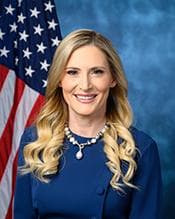
- Laurel Lee
- Cosponsors
- - 0 - 2
- Introduced
- In Committee
What this bill would do
This bill, known as the OPIOIDS Act, allows the Attorney General to award grants to improve data and surveillance regarding opioid-related overdoses. Grants may be provided to States, territories, and local authorities for various activities like toxicology testing and data linkage. It also authorizes grants for local law enforcement and forensic laboratories in communities with high overdose rates. These funds can be used for officer training, upgrading drug-tracing systems, and supporting medical examiners. Additionally, the bill amends the Omnibus Crime Control and Safe Streets Act to provide resources for first responder safety. Finally, it requires the DEA to develop uniform reporting standards and submit specific funding requests for the Fentanyl Signature Profiling Program.
Yes· 3 of 6
Does this do more about addiction and overdose deaths?+5
The bill provides significant resources for data collection and law enforcement training to combat the opioid crisis.
Does this put more money into scientific research?+4
The bill funds improved toxicology testing and data linkage capabilities.
Does this make what the government does easier for the public to see?+3
The bill mandates standardized reporting and explicit funding line items for transparency.
The opposite
No question was scored the opposite.
Who it would affect, and how
Potential Positive Impacts for People
-
Improved Data Collection: The Attorney General may award grants to improve postmortem toxicology testing, electronic death reporting, and the comprehensiveness of fatal overdose data (Section 2).
-
Enhanced Law Enforcement Capabilities: Grants may be used to train officers to identify overdoses and trace criminals through the darknet (Section 3, subsection a).
-
Better Forensic and Medical Services: Funds can be used to upgrade systems for tracing drugs and to provide training, staffing, and equipment to medical examiners and coroners' offices (Section 3, subsection a).
-
First Responder Safety: The bill amends existing law to provide training and resources for containment devices to prevent secondary exposure to fentanyl and other substances for first responders (Section 3, subsection d).
-
Standardized Data Sharing: The DEA will develop uniform reporting standards for drug purity, formulation, and weight to allow for better comparison across jurisdictions (Section 4, subsection a).
Potential Negative Impacts for People
- Reporting Requirements for Funding: Grantees cannot use the funds provided under law enforcement grants if they do not submit overdose data reports to the National Forensic Laboratory Information System (Section 3, subsection b).
Groups and Interests Ranking
Every group the model scored this bill for, from -10 to +10. Hover a score for the reason it gave.
- Governance And Ideology
- Improves Government Transparency+3Increases Federal Power+2
- Healthcare
- Improves Opioid Crisis Response+5
- Education And Technology
- Increases Scientific Research Funding+4
- National Security And Foreign Policy
- Increases Domestic Surveillance+3
- Social Issues And Justice
- Improves Policing Reform+2
- 10/28/2025
- 1 Cosponsor added.
- 2/12/2025
- Referred to the House Committee on the Judiciary.
- 1 Cosponsor added.
- Introduced in House
One bill Congress.gov lists as related to this one — companions in the other chamber, earlier versions, and bills this one absorbed or was folded into.
 Joe Neguse
Democrat · Colorado
 Chris Pappas
Democrat · New Hampshire