Bill · H.R. 1245· House(119-HR-1245)
Disaster Survivors Fairness Act of 2025
- Introduced
- 2/12/2025
- Last activity
- 2/25/2025 — Sponsor introductory remarks on measure. (CR E160-161)
- Sponsored by
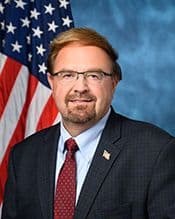
- Chuck Edwards
- Cosponsors
- - 1 - 7
- Introduced
What this bill would do
The Disaster Survivors Fairness Act of 2025 aims to improve individual assistance provided by FEMA. It establishes a unified disaster application system to streamline information sharing between federal agencies. The bill expands eligibility for repair and hazard mitigation assistance for damaged residences and infrastructure. It also introduces a state-managed housing pilot authority and improves rental assistance provisions. Additionally, the Act mandates several GAO reports to assess fraud, damage assessment accuracy, and assistance challenges.
Yes· 3 of 11
Would people with disabilities be better off under this?+5
The bill explicitly includes assistance for repairing residences rendered inaccessible to individuals with disabilities.
Does this expand the rights of people with disabilities?+5
The bill expands repair assistance to include residences made inaccessible by a disaster for individuals with disabilities.
Would households on low incomes be better off under this?+4
The bill expands eligibility for disaster repair assistance and improves rental assistance provisions.
The opposite
Does this protect people from being watched or searched?-2
The bill allows the FEMA Administrator to waive certain information collection requirements, which could impact privacy.
Who it would affect, and how
Potential Positive Impacts for People
-
Improved Application Process: The establishment of a "unified disaster application system" is intended to help disaster assistance programs work more swiftly and efficiently (Section 2).
-
Better Communication: The new system will allow applicants to receive status updates, update their information during recovery, and receive information about additional resources (Section 2).
-
Expanded Repair Assistance: Assistance for repairs will now cover residences or infrastructure damaged by a major disaster, rather than only those rendered "uninhabitable" (Section 4).
-
Hazard Mitigation Support: The President may provide financial assistance for cost-effective hazard mitigation measures to reduce threats to life and property for damaged residences, utilities, or infrastructure (Section 4).
-
Direct Assistance for Those in Need: The bill allows for direct assistance for repairs when there is a lack of available resources for individuals or households (Section 5).
-
Sheltering for First Responders: State, tribal, or local governments can be reimbursed for the costs of sheltering emergency response personnel and their households during a major disaster (Section 11).
-
Rental Assistance Updates: The bill includes local post-disaster rent increases as part of accommodation provisions (Section 12).
Potential Negative Impacts for People
-
Privacy and Data Risks: While the bill includes security requirements, the Administrator has the authority to waive certain information collection requirements upon declaring a major disaster (Section 2).
-
Potential for Data Misuse: The bill allows the Administrator to permit other Federal agencies to use the unified disaster application system, which requires an agreement to ensure compliance with security policies (Section 2).
-
Uncertainty in Information Collection: The GAO is tasked with reviewing the risks associated with the authority to waive information collection requirements, including potential effects on the consistent application of privacy and security laws (Section 2).
Groups and Interests Ranking
Every group the model scored this bill for, from -10 to +10. Hover a score for the reason it gave.
- Demographic And Interest Groups
- Good For People With Disabilities+5Good For Low Income Households+4Good For Middle Class Households+2Good For Rural Residents+2
- Social Issues And Justice
- Improves Disability Rights+5Improves Affordable Housing+4Improves Poverty Reduction+2
- Environment Energy And Infrastructure
- Improves Environmental Protections+3Improves Rural Development+2
- Economy And Finance
- Improves Small Business Support+2
- Governance And Ideology
- Improves Government Transparency+4Improves Privacy Rights-2
- 8/29/2025
- 1 Cosponsor added.
- 4/17/2025
- 1 Cosponsor added.
- 2/25/2025
- Sponsor introductory remarks on measure. (CR E160-161)
- 2/18/2025
- 1 Cosponsor added.
- 2/12/2025
- Referred to the Committee on Transportation and Infrastructure, and in addition to the Committees on Financial Services, and Small Business, for a period to be subsequently determined by the Speaker, in each case for consideration of such provisions as fall within the jurisdiction of the committee concerned.
- Referred to the Subcommittee on Economic Development, Public Buildings, and Emergency Management.
- 5 Cosponsors added.
- Introduced in House
One bill Congress.gov lists as related to this one — companions in the other chamber, earlier versions, and bills this one absorbed or was folded into.
 Ed Case
Democrat · Hawaii
 Troy Carter
Democrat · Louisiana
 Randy Feenstra
Republican · Iowa
 Joe Neguse
Democrat · Colorado
 Brad Sherman
Democrat · California
 Dina Titus
Democrat · Nevada
 Jill Tokuda
Democrat · Hawaii
 Eugene Vindman
Democrat · Virginia