Bill · H.R. 1243· House(119-HR-1243)
United Nations Voting Accountability Act of 2025
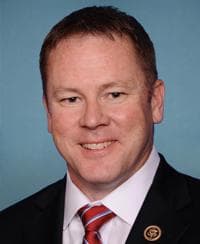
- Introduced
- 2/12/2025
- Last activity
- 2/12/2025 — Referred to the House Committee on Foreign Affairs.
- Sponsored by
- Warren Davidson
- Cosponsors
- - 5 - 0
- Introduced
- In Committee
What this bill would do
The ``United Nations Voting Accountability Act of 2025'' aims to prohibit United States assistance to foreign countries that oppose the position of the United States in the United Nations. A country is considered to have opposed the U.S. position if its recorded votes in the General Assembly (and the Security Council, if applicable) match the U.S. position less than 50 percent of the time during the most recent session. The Secretary of State has the authority to exempt countries if there is a fundamental change in leadership and policies that ensures the country will no longer oppose U.S. positions. These exemptions are temporary and require notification and discussion with Congress. The Act covers various forms of assistance, including economic support, international military education, and foreign military financing.
Yes· 3 of 4
Does this reduce what the federal government spends?+5
The bill reduces government spending by cutting foreign assistance to non-aligned countries.
Does this give the federal government more power?+4
The bill expands the use of federal foreign assistance as a tool of political leverage.
Does this make the government pay for what it commits to?+3
The bill implements stricter control over how foreign aid is distributed based on political alignment.
The opposite
Does this send more money or help to other countries?-7
The bill actively prohibits various forms of foreign aid to countries that do not align with U.S. voting positions.
Does this strengthen ties with allied countries?-3
While intended to increase leverage, the bill may strain relations with nations that disagree with U.S. positions.
Does this favour talking over confrontation abroad?-2
The policy uses financial pressure which may complicate diplomatic negotiations.
Who it would affect, and how
Potential Positive Impacts for People
-
Encourages Voting Alignment: By prohibiting assistance to countries that vote against the U.S. position less than 50 percent of the time, the bill aims to influence how foreign governments vote in the United Nations (Section 2(a), Section 2(c)(1)).
-
Flexibility for Changing Governments: The Secretary of State can exempt countries that have undergone a fundamental change in leadership and policies, which could allow assistance to resume if the new government aligns with U ability to no longer oppose the United States (Section 2(b)(1)).
Potential Negative Impacts for People
-
Reduction in Foreign Assistance: Countries that frequently vote against the position of the United States will lose access to various forms of support, including economic support funds, international military education and training, and the Foreign Military Financing Program (Section 2(a), Section 2(c)(3)).
-
Uncertainty of Aid Due to Temporary Exemptions: Even if a country undergoes a change in leadership to regain assistance, the exemption is only effective until the submission of the next required report to Congress, which could create instability in aid (Section 2(b)(2)).
Groups and Interests Ranking
Every group the model scored this bill for, from -10 to +10. Hover a score for the reason it gave.
- National Security And Foreign Policy
- Increases Foreign Aid-7Improves International Alliances-3Improves Diplomatic Engagement-2
- Economy And Finance
- Reduces Government Spending+5Improves Fiscal Responsibility+3
- Governance And Ideology
- Increases Federal Power+4Improves Government Transparency+2
- 3/4/2025
- 1 Cosponsor added.
- 2/24/2025
- 2 Cosponsors added.
- 2/12/2025
- Referred to the House Committee on Foreign Affairs.
- 2 Cosponsors added.
- Introduced in House
One bill Congress.gov lists as related to this one — companions in the other chamber, earlier versions, and bills this one absorbed or was folded into.
 Andy Biggs
Republican · Arizona
 Pat Harrigan
Republican · North Carolina
 Gary Palmer
Republican · Alabama
 Michael Rulli
Republican · Ohio
 Randy Weber
Republican · Texas