Bill · H.R. 1223· House(119-HR-1223)
ANCHOR Act
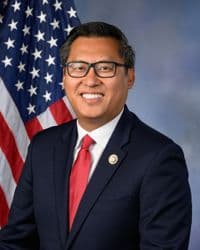
- Introduced
- 2/12/2025
- Last activity
- 5/21/2025 — Received in the Senate and Read twice and referred to the Committee on Commerce, Science, and Transportation.
- Sponsored by
- Vince Fong
- Cosponsors
- - 2 - 3
- Introduced
- Passed House
- In Senate committee
What this bill would do
The ANCHOR Act requires the Director of the National Science Foundation to develop a plan to improve the cybersecurity and telecommunications of the U.S. Academic Research Fleet. This plan must include assessments of networking needs, cybersecurity requirements, and the costs associated with equipment and personnel. The Director is tasked with evaluating how these upgrades impact daily charter rates and the time required for implementation. Additionally, the plan should explore ways to centralize data management or use common solutions across the fleet. Finally, the Act outlines a process for supporting upgrades and requires a progress report two years after the initial plan is submitted.
Yes· 3 of 9
Does this better protect the country from computer attacks?+6
The act requires a plan to improve the cybersecurity of the U.S. Academic Research Fleet.
Does this put more money into scientific research?+5
The act facilitates upgrades to cyberinfrastructure specifically to support the scientific mission of research vessels.
Does this get reliable internet to more people?+5
The act aims to improve telecommunications and networking capabilities for the research fleet.
The opposite
No question was scored the opposite.
What Congress actually voted on
One recorded vote has been taken on this bill.
- The House: a fast-track vote, needing two-thirds to passPassed 412–11
The House sets aside its normal procedure to move quickly: no amendments, little debate, and a two-thirds bar instead of a simple majority. It is used for measures expected to be uncontroversial, so a bill that fails here failed despite broad expectations that it would not.
05/20/2025 · Roll call 136 · recorded as “On Motion to Suspend the Rules and Pass”
Who it would affect, and how
Potential Positive Impacts for People
-
Improved Health and Well-being: The plan considers network capabilities to provide personnel with access to telemedicine, which includes mental health care, counseling, and other remote individual care services (Section 2(c)(1)(B)).
-
Educational Opportunities: Increased network capabilities could allow for video communications to provide educational services for K-12 students, including remote classroom teaching (Section 2(c)(1)(G)).
-
Enhanced Scientific Research: The act looks at improving connectivity for uploading scientific data, conducting real-time streaming for observers, and enabling remote subject matter experts to conduct surveys and seafloor mapping (Section 2(c)(1)(C)-(E)).
-
Operational Efficiency: The plan considers using technology to allow manufacturers and vendors to perform maintenance and repairs via remote experts, which could help when expertise is limited on a vessel (Section 2(c)(1)(F)).
Potential Negative Impacts for People
-
Increased Research Costs: The plan requires an assessment of how upgrades might impact daily charter rates, which could lead to higher costs for using these vessels (Section 2(b)(3)(C)).
-
Additional Financial Burdens: The assessment must account for costs exceeding current expenditures, including new equipment like satellite communications and high-performance computing, as well as increased personnel costs for training and support (Section 2(b)(3)(A)-(B)).
Groups and Interests Ranking
Every group the model scored this bill for, from -10 to +10. Hover a score for the reason it gave.
- Education And Technology
- Improves Internet Access+5Increases Scientific Research Funding+5Improves Data Privacy+4
- Healthcare
- Improves Mental Health Access+5Improves Healthcare Access+3
- Demographic And Interest Groups
- Good For Students+4Good For Children+3
- National Security And Foreign Policy
- Improves Cybersecurity Defense+6
- Environment Energy And Infrastructure
- Improves Environmental Protections+3
- 5/21/2025
- Received in the Senate and Read twice and referred to the Committee on Commerce, Science, and Transportation.
- 5/20/2025
- Motion to reconsider laid on the table Agreed to without objection.
- Passed/agreed to in House: On motion to suspend the rules and pass the bill Agreed to by the Yeas and Nays: (2/3 required): 412 - 11 (Roll no. 136). (text: 5/19/2025 CR H2113-2114)
- On motion to suspend the rules and pass the bill Agreed to by the Yeas and Nays: (2/3 required): 412 - 11 (Roll no. 136). (text: 5/19/2025 CR H2113-2114)
- Considered as unfinished business. (consideration: CR H2168)
- 5/19/2025
- At the conclusion of debate, the chair put the question on the motion to suspend the rules. Mr. Babin objected to the vote on the grounds that a quorum was not present. Further proceedings on the motion were postponed. The point of no quorum was considered as withdrawn.
- DEBATE - The House proceeded with forty minutes of debate on H.R. 1223.
- Considered under suspension of the rules. (consideration: CR H2113-2115)
- Mr. Fong moved to suspend the rules and pass the bill.
- 5/5/2025
- 2 Cosponsors added.
- 4/29/2025
- Committee Consideration and Mark-up Session Held
- Ordered to be Reported by Voice Vote.
- 2/24/2025
- 2 Cosponsors added.
- 2/12/2025
- Referred to the House Committee on Science, Space, and Technology.
- 1 Cosponsor added.
- Introduced in House
 Nicholas Begich
Republican · Alaska
 Sarah McBride
Democrat · Delaware
 Jay Obernolte
Republican · California
 Josh Riley
Democrat · New York
 Haley Stevens
Democrat · Michigan