Bill · H.R. 1222· House(119-HR-1222)
Operation Lone Star Reimbursement Act
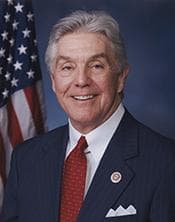
- Introduced
- 2/11/2025
- Last activity
- 2/11/2025 — Referred to the Subcommittee on Border Security and Enforcement.
- Sponsored by
- Roger Williams
- Cosponsors
- - 11 - 0
- Introduced
- In Committee
What this bill would do
The Operation Lone Star Reimbursement Act aims to reimburse the State of Texas for expenses related to securing the southern international border. The bill states that Texas has used taxpayer funds to combat threats like human trafficking, drug proliferation, and unlawful entry. It specifically mentions the Operation Lone Star initiative launched in March 2021. To receive funds, the Governor of Texas must submit an application of expenses to the Secretaries of Homeland Security and the Treasury. The Secretary of Homeland Security will then review the application and report the decision to Congress. Finally, the Secretary of the Treasury is tasked with paying the determined reimbursable amount to the State of Texas.
Yes
Does this tighten control of the border?+7
The bill funds the reimbursement of Texas for border security activities such as barriers and enforcement.
Would people in rural areas be better off under this?+4
The bill provides resources to Texas for security activities occurring in its border regions.
The opposite· 3 of 5
Would immigrants be better off under this?-6
The bill facilitates the reimbursement of funds used for the apprehension and denial of illegal immigrants.
Would Hispanic Americans be better off under this?-5
The bill funds the apprehension of immigrants and denial of entry, which disproportionately affects Hispanic communities at the border.
Does this make it easier for immigrants already here to become citizens?-5
The bill focuses on the apprehension and denial of entry for immigrants rather than facilitating citizenship.
Who it would affect, and how
Potential Positive Impacts for People
-
Reimbursement of Texas Taxpayer Funds: The bill provides a mechanism to return $11.1 billion in Texas taxpayer funding used for border security activities (Section 2, Subsection 5).
-
Increased Security Efforts: The bill cites that actions taken by Texas, such as Operation Lone Star, have resulted in the apprehension of immigrants, denial of attempted entries, criminal arrests, seizure of fentanyl, and construction of border barriers (Section 2, Subsection 4).
-
Protection Against Criminal Activities: The bill finds that Texas' actions aim to maintain safety and security by protecting against human trafficking, sex trafficking, drug proliferation, illicit movement of weapons and contraband, criminal organizations, and unlawful entry (Section 2, Subsection 3).
Potential Negative Impacts for People
- No specific negative impacts are explicitly stated in the provided text.
Groups and Interests Ranking
Every group the model scored this bill for, from -10 to +10. Hover a score for the reason it gave.
- Demographic And Interest Groups
- Good For Rural Residents+4Good For Immigrants-6Good For Hispanic Americans-5Good For Low Income Households-2
- Social Issues And Justice
- Improves Border Security+7Improves Pathway To Citizenship-5
- Economy And Finance
- Reduces Government Spending-1
- 2/14/2025
- 2 Cosponsors added.
- 2/12/2025
- 2 Cosponsors added.
- 2/11/2025
- Referred to the Committee on the Judiciary, and in addition to the Committee on Homeland Security, for a period to be subsequently determined by the Speaker, in each case for consideration of such provisions as fall within the jurisdiction of the committee concerned.
- Referred to the Subcommittee on Border Security and Enforcement.
- 7 Cosponsors added.
- Introduced in House
 Brian Babin
Republican · Texas
 Dan Crenshaw
Republican · Texas
 Jake Ellzey
Republican · Texas
 Lance Gooden
Republican · Texas
 Craig Goldman
Republican · Texas
 Brandon Gill
Republican · Texas
 Morgan Luttrell
Republican · Texas
 August Pfluger
Republican · Texas
 Pete Sessions
Republican · Texas
 Keith Self
Republican · Texas
 Randy Weber
Republican · Texas