Bill · H.R. 1212· House(119-HR-1212)
Countering Online Radicalization and Terrorism Act
- Introduced
- 2/11/2025
- Last activity
- 2/11/2025 — Referred to the Subcommittee on Counterterrorism and Intelligence.
- Sponsored by
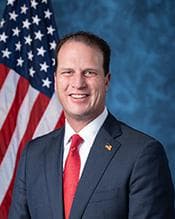
- August Pfluger
- Cosponsors
- - 4 - 2
- Introduced
- In Committee
What this bill would do
The Countering Online Radicalization and Terrorism Act requires the Secretary of Homeland Security to conduct annual assessments regarding terrorism threats. These assessments focus on terrorist organizations that use foreign cloud-based mobile or desktop messaging applications. The Secretary must submit these reports to specific congressional committees for five years. The assessments will analyze how these applications are used for radicalization, recruitment, and monetary support through online payment features. Additionally, the Secretary is tasked with reviewing and sharing information with state and local fusion centers.
Yes· 3 of 5
Does this better protect the country from computer attacks?+5
The bill enhances national security by monitoring threats posed by foreign cloud-based messaging applications used by terrorist organizations.
Does this put more money into stopping terrorism?+3
The bill directs resources toward assessing and addressing the terrorism threat landscape in digital messaging spaces.
Does this put more rules on large technology companies?+3
The bill targets specific foreign-owned messaging applications for heightened scrutiny.
The opposite· 3 of 4
Does this give the government more power to monitor people inside the country?-3
The requirement for assessments of messaging application usage may increase domestic surveillance capabilities.
Does this protect people from being watched or searched?-3
The monitoring of private messaging platforms presents a potential risk to individual privacy rights.
Does this give people more control over their personal data?-2
The focus on monitoring messaging applications may pose risks to individual privacy and data security.
Who it would affect, and how
Potential Positive Impacts for People
-
Reducing National Security Risks: The bill aims to reduce risks to the people of the United States by requiring the Department of Homeland Security to recognize, assess, and address threats posed by terrorist organizations utilizing specific messaging applications (Section 2).
-
Increased Transparency and Oversight: The Secretary of Homeland Security is required to post the unclassified portion of each assessment on a publicly available website (Section 3(a)(4)).
-
Protection of Civil Liberties: Assessments must be coordinated with the Office of the General Counsel, the Privacy Office, and the Office of Civil Rights and Civil Liberties to ensure they comply with the law and protect individuals' privacy, civil rights, and civil liberties (Section 3(a)(3)).
-
Enhanced Information Sharing: The Secretary is required to review information gathered by State and local fusion centers and ensure that such information is disseminated back to those centers (Section 3(b)).
Potential Negative Impacts for People
-
Potential Privacy Concerns: While the bill includes coordination to protect privacy, the assessments involve analyzing how terrorist organizations use messaging applications to radicalize and recruit individuals (Section 3(a)(2)(A)).
-
Potential Impact on Civil Rights: The bill notes the need for coordination with the Office of Civil Rights and Civil Liberties to ensure assessments comply with the law and protect these rights, implying a potential risk that must be managed (Section 3(a)(3)).
Groups and Interests Ranking
Every group the model scored this bill for, from -10 to +10. Hover a score for the reason it gave.
- National Security And Foreign Policy
- Improves Cybersecurity Defense+5Increases Counter Terrorism Funding+3Increases Domestic Surveillance-3
- Education And Technology
- Increases Big Tech Regulation+3Improves Data Privacy-2
- Governance And Ideology
- Improves Government Transparency+3Increases Federal Power+2Improves Privacy Rights-3Improves Freedom Of Speech-2
- 12/9/2025
- 1 Cosponsor added.
- 2/26/2025
- 1 Cosponsor added.
- 2/24/2025
- 1 Cosponsor added.
- 2/11/2025
- Referred to the House Committee on Homeland Security.
- Referred to the Subcommittee on Counterterrorism and Intelligence.
- 3 Cosponsors added.
- Introduced in House
 Gabe Evans
Republican · Colorado
 Morgan Luttrell
Republican · Texas
 Zachary Nunn
Republican · Iowa
 Jimmy Panetta
Democrat · California
 Eugene Vindman
Democrat · Virginia
 Randy Weber
Republican · Texas