Bill · H.R. 1210· House(119-HR-1210)
Protecting Taxpayers’ Wallets Act of 2025
- Introduced
- 2/11/2025
- Last activity
- 3/25/2025 — Ordered to be Reported (Amended) by the Yeas and Nays: 23 - 21.
- Sponsored by
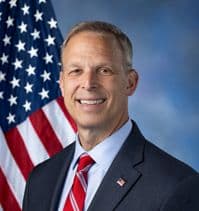
- Scott Perry
- Cosponsors
- - 3 - 0
- Introduced
What this bill would do
The Protecting Taxpayers' Wallets Act of 2025 aims to amend how federal agencies interact with recognized labor organizations. It requires agency heads to charge these organizations a quarterly fee for the use of agency resources and employee time. The fee is calculated based on the value of union time and the value of provided resources. Payments made from these fees are to be transferred directly to the general fund of the Treasury. The bill also establishes strict enforcement measures and penalties for non-payment. Additionally, it introduces specific time-tracking requirements for labor representatives.
Yes
Does this give the federal government more power?+3
The bill expands federal agency control over labor organization activities and resources.
Does this make the government pay for what it commits to?+2
It generates revenue for the Treasury by charging unions for the use of agency resources.
Does this make what the government does easier for the public to see?+1
It establishes oversight through mandatory biennial evaluations by the Inspector General.
The opposite
Would union members be better off under this?-8
The bill imposes significant new financial burdens and loses rights for union members and representatives.
Does this strengthen the rights of workers to organise?-7
The bill significantly weakens union protections by imposing new fees and stripping grievance/arbitration rights.
Does this protect the right to fair treatment by the courts?-5
The bill limits the ability to appeal or contest resource valuation and disciplinary actions.
Who it would affect, and how
Potential Positive Impacts for People
-
Transfer of funds to the Treasury: Payments collected from labor organizations are transferred to the general fund of the Treasury (Section 2(a)(4)(B)), which could provide more money for the government to use.
-
Valuation of resources: The bill requires agency heads to determine the value of resources using rates from the General Services Administration or market rates (Section 2(b)(2)(B)), ensuring that the costs charged reflect actual values.
-
Accountability through evaluation: The Inspector General is required to conduct evaluations every two years to check on compliance, accuracy of time recording, and the promptness of fee payments (Section 2(c)(4)), which ensures the law is being followed correctly.
Potential Negative Impacts for People
-
Financial burden on labor organizations: Labor organizations must pay a quarterly fee that includes the value of union time and agency resources (Section 2(a)(2)), which creates a new cost for these groups.
-
Increased costs for unpaid fees: If a labor organization fails to pay on time, the fee amount is increased at a rate equal to a specific interest rate (Section 2(c)(1)(A)(i)).
-
Loss of union benefits and representation: Failure to pay fees can lead to the denial of union time and agency resources after 90 days (Section 2(c)(1)(A)(i)(I)(aa-bb)), the termination of all allotments after 180 days (Section 2(c)(1)(A)(i)(II)(aa-bb)), and the termination of the organization's certification as an exclusive representative after 365 days (Section 2(c)(1)(A)(i)(III)).
-
Restrictions on legal recourse: Determinations regarding the value of resources or union time cannot be subject to collective bargaining, grievance procedures, or appealed (Section 2(b)(3)). Additionally, adverse actions taken against employees for failing to record union time cannot be subject to grievance procedures or arbitration (Section 2(c)(2)(A)(iii)(I)).
-
Disciplinary action for employees: Labor representatives who fail to record their union time in the agency's tracking system can be considered absent without leave and subject to adverse actions (Section 2(c)(2)(A)(i)).
Groups and Interests Ranking
Every group the model scored this bill for, from -10 to +10. Hover a score for the reason it gave.
- Demographic And Interest Groups
- Good For Union Workers-8
- Economy And Finance
- Improves Fiscal Responsibility+2Improves Union Protections-7
- Governance And Ideology
- Increases Federal Power+3Improves Government Transparency+1Improves Due Process-5
- 4/28/2025
- 1 Cosponsor added.
- 3/25/2025
- Committee Consideration and Mark-up Session Held
- Ordered to be Reported (Amended) by the Yeas and Nays: 23 - 21.
- 3/24/2025
- 2 Cosponsors added.
- 2/11/2025
- Referred to the House Committee on Oversight and Government Reform.
- Introduced in House
One bill Congress.gov lists as related to this one — companions in the other chamber, earlier versions, and bills this one absorbed or was folded into.
 Ben Cline
Republican · Virginia
 John McGuire
Republican · Virginia
 Andrew Ogles
Republican · Tennessee