Bill · H.R. 1166· House(119-HR-1166)
Decoupling from Foreign Adversarial Battery Dependence Act
- Introduced
- 2/10/2025
- Last activity
- 3/11/2025 — Received in the Senate and Read twice and referred to the Committee on Homeland Security and Governmental Affairs.
- Sponsored by
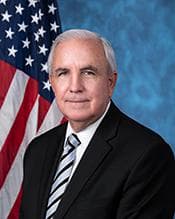
- Carlos Gimenez
- Cosponsors
- - 4 - 0
- Introduced
- Passed House
- In Senate committee
What this bill would do
The "Decoupling from Foreign Adversarial Battery Dependence Act" prohibits the Department of Homeland Security from using its funds to procure certain batteries. Starting October 1, 2027, the Department cannot buy batteries produced by specific entities such as CATL, BYD Company, Limited, and others listed in the act. This prohibition also applies to any subsidiaries or successors of those companies. The law defines a battery as being produced by these entities if they assemble the final product or provide the majority of the components. The Secretary of Homeland Security may grant specific waivers under certain conditions. Finally, the Secretary must submit a report regarding the impact on mission and costs to Congress.
Yes
Does this better protect the country from computer attacks?+5
The bill mitigates risks to national security and infrastructure by restricting procurement of batteries from foreign-made entities.
The opposite
Would union members be better off under this?-5
The bill may negatively impact domestic production and costs, which can indirectly affect labor markets.
Who it would affect, and how
Potential Positive Impacts for People
-
National Security and Infrastructure Protection: The bill allows for a waiver process where the Secretary of Homeland Security must assess that batteries do not pose a "national security, data, or infrastructure risk to the United States" (Section 2(d)(1)(A)).
-
Protection Against Forced Labor: The prohibition includes any entity listed under the "Uyghur Forced Labor Prevention Act" (Section 2(b)(7)).
-
Defense Against Foreign Military Influence: The bill prevents procurement from entities identified by the Secretary of Defense as a "Chinese military company" (Section 2(b)(8)).
Potential Negative Impacts for People
-
Increased Costs or Mission Impact: The Secretary of Homeland Security is required to report on "anticipated impacts on mission and costs on the Department of Homeland Security" resulting from this act (Section 2(e)).
-
Limited Procurement Options: The bill restricts the Department from using funds for batteries produced by specific entities, including CATL, BYD Company, Limited, and others, unless a waiver is granted (Section 2(b)).
Groups and Interests Ranking
Every group the model scored this bill for, from -10 to +10. Hover a score for the reason it gave.
- Demographic And Interest Groups
- Good For Union Workers-5
- National Security And Foreign Policy
- Improves Cybersecurity Defense+5
- 3/11/2025
- Received in the Senate and Read twice and referred to the Committee on Homeland Security and Governmental Affairs.
- 3/10/2025
- Motion to reconsider laid on the table Agreed to without objection.
- Passed/agreed to in House: On motion to suspend the rules and pass the bill Agreed to by voice vote. (text: CR H1053-1054)
- On motion to suspend the rules and pass the bill Agreed to by voice vote. (text: CR H1053-1054)
- DEBATE - The House proceeded with forty minutes of debate on H.R. 1166.
- Considered under suspension of the rules. (consideration: CR H1053-1054)
- Mr. Green (TN) moved to suspend the rules and pass the bill.
- 2/10/2025
- Referred to the House Committee on Homeland Security.
- Referred to the Subcommittee on Counterterrorism and Intelligence.
- 4 Cosponsors added.
- Introduced in House
One bill Congress.gov lists as related to this one — companions in the other chamber, earlier versions, and bills this one absorbed or was folded into.
 Mark Green
Republican · Tennessee
 John Moolenaar
Republican · Michigan
 Daniel Meuser
Republican · Pennsylvania
 August Pfluger
Republican · Texas