Bill · H.R. 1160· House(119-HR-1160)
Health Care Provider Shortage Minimization Act of 2025
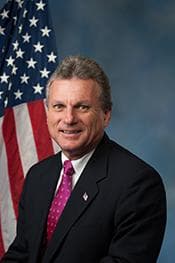
- Introduced
- 2/10/2025
- Last activity
- 2/10/2025 — Referred to the House Committee on Ways and Means.
- Sponsored by
- Earl Carter
- Cosponsors
- - 9 - 0
- Introduced
- In Committee
What this bill would do
The Health Care Provider Shortage Minimization Act of 2025 seeks to amend the Internal Revenue Code of 1986. It aims to clarify the tax treatment of locum tenens physicians and advanced care practitioners. Specifically, the bill classifies these individuals as independent contractors rather than employees. This change applies to the individuals, the persons for whom services are performed, and any contracting agencies. The stated goal is to help alleviate physician shortages, including in underserved areas.
Yes· 3 of 7
Would people in rural areas be better off under this?+5
The bill specifically targets the alleviation of physician shortages in underserved areas, which often include rural communities.
Does this make health care easier to get in general?+5
Clarifying the status of temporary providers is intended to help fill gaps in medical services for underserved areas.
Would households on low incomes be better off under this?+3
Improved access to healthcare providers can benefit low-income households who rely on local services.
The opposite
Does this strengthen the rights of workers to organise?-2
By classifying locum tenens workers as independent contractors rather than employees, the bill removes them from standard employment-based worker protections.
Who it would affect, and how
Potential Positive Impacts for People
-
Alleviate Physician Shortages: The bill is intended to help address shortages of healthcare providers, specifically including those in underserved areas (Section 2(a)).
-
Clarified Tax Status for Practitioners: For qualified locum tenens physicians or advanced care practitioners providing temporary services for no more than one continuous year, the law would clarify that they are not treated as employees (Section 2(a)(1)).
-
Clarified Status for Agencies and Payors: The bill specifies that agencies contracting with these providers, the persons receiving their services, and any payors will not be treated as employers (Section 2(a)(2) and (3)).
Potential Negative Impacts for People
- Contractual Requirements: To qualify under this section, the services must be performed pursuant to a written contract that explicitly provides that the individual will not be treated as an employee (Section 2(b)(1)(C)).
Groups and Interests Ranking
Every group the model scored this bill for, from -10 to +10. Hover a score for the reason it gave.
- Demographic And Interest Groups
- Good For Rural Residents+5Good For Low Income Households+3Good For African Americans+2Good For Hispanic Americans+2Good For Urban Residents+1
- Healthcare
- Improves Healthcare Access+5
- Economy And Finance
- Improves Small Business Support+2Improves Union Protections-2
- 7/6/2026
- 1 Cosponsor added.
- 4/21/2026
- 1 Cosponsor added.
- 5/7/2025
- 1 Cosponsor added.
- 4/7/2025
- 1 Cosponsor added.
- 2/11/2025
- 1 Cosponsor added.
- 2/10/2025
- Referred to the House Committee on Ways and Means.
- 4 Cosponsors added.
- Introduced in House
 Dan Crenshaw
Republican · Texas
 Neal Dunn
Republican · Florida
 Glenn Grothman
Republican · Wisconsin
 Blake Moore
Republican · Utah
 Burgess Owens
Republican · Utah
 Robert Onder
Republican · Missouri
 Claudia Tenney
Republican · New York
 Derrick Van Orden
Republican · Wisconsin
 Randy Weber
Republican · Texas