Bill · H.R. 1149· House(119-HR-1149)
POWER Act
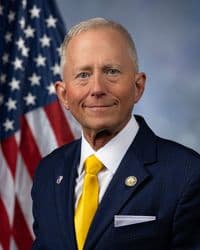
- Introduced
- 2/7/2025
- Last activity
- 2/7/2025 — Referred to the House Committee on Energy and Commerce.
- Sponsored by
- Jefferson Van Drew
- Cosponsors
- None
- Introduced
- In Committee
What this bill would do
This bill, known as the "POWER Act," requires retail electric utilities to notify consumers before raising rates. Utilities must provide notice at least 30 days in advance, including the percentage of the increase and the reasons behind it. The act also requires notification through multiple channels like mail, email, and local media. For rate increases of 5 percent or more, utilities must notify the Secretary of Energy 60 days in advance. The Secretary of Energy is then tasked with reviewing the increase and publishing a report on its potential impacts.
Yes· 3 of 7
Does this give people more protection from unfair business practices?+6
The bill mandates transparency regarding rate increases and provides mechanisms for consumer feedback and complaints.
Does this make what the government does easier for the public to see?+5
The bill increases transparency by requiring utilities to provide detailed justifications and public reports on rate changes.
Would households on low incomes be better off under this?+4
The bill requires the Secretary of Energy to explore financial aid and mitigation strategies for consumers facing higher costs.
The opposite
No question was scored the opposite.
Who it would affect, and how
Potential Positive Impacts for People
-
Increased Transparency for Consumers: Under Section 2(a)(1) and (2), consumers will receive a clear statement of the percentage of the rate increase, a breakdown of the reasons, and an explanation of how it impacts their bills.
-
Consumer Feedback Opportunities: Section 2(a)(2)(D) requires that notifications include information on how electric consumers can provide feedback or file a complaint regarding the increase.
-
Broad Access to Information: Section 2(a)(3) mandates that utilities use multiple communication channels, such as direct mail, email, and local newspapers, to ensure impacted consumers are notified.
-
Government Oversight and Recommendations: Under Section 2(b)(3), the Secretary of Energy will publish a report that includes recommendations for adjusting rate increases, ways to mitigate impacts (like financial aid or phasing in increases), and ways for utilities to improve efficiency.
-
Accountability through Penalties: Section 2(a)(4) ensures that if a utility fails to provide required notice, they may face a civil penalty of up to $10,000 and are prohibited from implementing the rate increase until the requirement is met.
Potential Negative Impacts for People
- No specific negative impacts for people are explicitly detailed in the text provided.
Groups and Interests Ranking
Every group the model scored this bill for, from -10 to +10. Hover a score for the reason it gave.
- Demographic And Interest Groups
- Good For Low Income Households+4Good For Middle Class Households+3Good For Urban Residents+2
- Economy And Finance
- Improves Consumer Protection+6
- Governance And Ideology
- Improves Government Transparency+5
- Social Issues And Justice
- Improves Poverty Reduction+3
- Environment Energy And Infrastructure
- Improves Environmental Protections+2
- 2/7/2025
- Referred to the House Committee on Energy and Commerce.
- Introduced in House