Bill · H.R. 1124· House(119-HR-1124)
Help Our Kelp Act of 2025
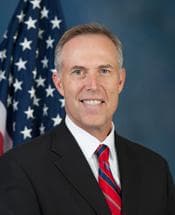
- Introduced
- 2/7/2025
- Last activity
- 2/7/2025 — Referred to the House Committee on Natural Resources.
- Sponsored by
- Jared Huffman
- Cosponsors
- - 2 - 0
- Introduced
- In Committee
What this bill would do
The "Help Our Kelp Act of 2025" requires the Secretary of Commerce to establish a grant program focused on the conservation, restoration, and management of kelp forest ecosystems. The program aims to support native wild kelp and its long-term recovery without involving commercial or mechanized harvesting. Eligible entities, including the fishing industry, higher education institutions, and Indian Tribes, can apply for these grants. Projects may focus on ecosystem resilience, seeding, connectivity, and predator control. The bill authorizes $5,000,000 annually from fiscal years 2026 through 2030. A specific portion of these funds is set aside for Indian Tribes.
Yes· 3 of 9
Does this better protect air, water and wildlife?+8
The bill funds the conservation, restoration, and management of critical kelp forest ecosystems.
Would Native Americans be better off under this?+7
The bill prioritizes funding and the integration of Indigenous knowledge and cultural practices for Indian Tribes.
Does this narrow racial gaps in how people are treated?+5
The bill specifically mandates that at least $750,000 annually be made available for grants to Indian Tribes.
The opposite
Does this reduce what the federal government spends?-1
The bill authorizes $25,000,000 in new federal spending over five years.
Who it would affect, and how
Potential Positive Impacts for People
-
Support for Ecosystem Resilience: The bill allows for projects that address regional declines and focus on long-term ecosystem and socioeconomic resilience of kelp forests (Section 2, subsection d).
-
Restoration of Natural Structures: Grants can fund the recovery of natural trophic relationships, such as predator control through targeted urchin removal and the recovery of sunflower sea stars (Section 2, subsection d).
-
Integration of Indigenous Knowledge: The program supports the integration of Indigenous knowledge and cultural practices into restoration and monitoring through consultation or co-management with Indian Tribes (Section 2, subsection d).
-
Economic and Community Opportunities: The grant program includes various eligible entities such as members of the fishing industry, which includes commercial and recreational fishermen (Section 2, subsection c).
-
Dedicated Funding for Indian Tribes: The bill ensures that not less than $750,000 of the annual authorized amount is made available for grants to Indian Tribes (Section 2, subsection g).
Potential Negative Impacts for People
- Financial Burden on Grant Applicants: Most eligible entities are required to provide a non-Federal share of project costs, as Federal funding may not exceed 85 percent of the total project cost (Section 2, subsection e).
Groups and Interests Ranking
Every group the model scored this bill for, from -10 to +10. Hover a score for the reason it gave.
- Demographic And Interest Groups
- Good For Native Americans+7Good For Business Owners+3Good For Students+2
- Environment Energy And Infrastructure
- Improves Environmental Protections+8
- Social Issues And Justice
- Improves Racial Equity+5Improves Poverty Reduction+1
- Education And Technology
- Increases Scientific Research Funding+4
- Governance And Ideology
- Increase States Rights+2
- Economy And Finance
- Increases Job Creation+2Reduces Government Spending-1
- 4/9/2026
- 1 Cosponsor added.
- 7/17/2025
- 1 Cosponsor added.
- 2/7/2025
- Referred to the House Committee on Natural Resources.
- Introduced in House
One bill Congress.gov lists as related to this one — companions in the other chamber, earlier versions, and bills this one absorbed or was folded into.
 Sean Casten
Democrat · Illinois
 Kim Schrier
Democrat · Washington