Bill · H.R. 1119· House(119-HR-1119)
Unemployment Integrity Act of 2025
- Introduced
- 2/7/2025
- Last activity
- 2/7/2025 — Referred to the House Committee on Ways and Means.
- Sponsored by
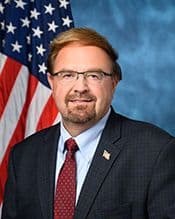
- Chuck Edwards
- Cosponsors
- - 6 - 0
- Introduced
- In Committee
What this bill would do
The Unemployment Integrity Act of 2025 aims to amend the Social Security Act regarding unemployment compensation. It introduces new requirements for individuals receiving regular compensation, such as participating in interviews and reemployment services. The bill also establishes a method for employers to report claimants who fail to comply with state laws. Additionally, it directs the Secretary of Labor to study the impact of increasing random audits to improve the administration of state laws. Finally, the act limits the transfer of funds for extended unemployment compensation unless certain state law requirements are met.
Yes
Does this reduce what the federal government spends?+2
The bill implements stricter requirements and audits intended to ensure unemployment funds are administered strictly according to state laws.
Does this make what the government does easier for the public to see?+1
The bill mandates a study on the effects of increasing random audits to improve the administration of unemployment laws.
The opposite· 3 of 4
Would households on low incomes be better off under this?-3
The bill imposes new burdens on unemployment claimants, such as mandatory interviews and potential drug testing, to remain eligible for benefits.
Does this increase support for people who lose their jobs?-3
The bill places new eligibility requirements and funding transfer limitations on unemployment compensation.
Would union members be better off under this?-2
The bill introduces stricter compliance and reporting measures for individuals seeking unemployment compensation.
Who it would affect, and how
Potential Positive Impacts for People
-
Increased Accountability through Audits: Under Section 2(b), the Secretary of Labor may increase random audits through the Benefit Accuracy Measurement program if a study shows it will improve the administration of state unemployment laws.
-
Employment Readiness Requirements: Section 2(a)(1) requires claimants to respond to requests, attend interviews, participate in reemployment services, and comply with requests like drug testing or skill assessments, which are tied to the condition of eligibility for regular compensation.
Potential Negative Impacts for People
-
Increased Burdens on Claimants: According to Section 2(a)(1), individuals receiving regular compensation must now meet specific conditions to remain eligible, including attending interviews at agreed-upon times and potentially undergoing drug testing or skill assessments.
-
Risk of Third-Party Reporting: Section 2(a)(2) creates a method where a person a claimant is seeking employment with can voluntarily report the claimant's failure to comply with state law provisions.
-
Restrictions on State Funding: Under Section 3(a), transfers of funds for extended unemployment compensation may be prohibited unless the Secretary of Labor certifies that the State law includes specific requirements regarding claimant compliance and reporting.
Groups and Interests Ranking
Every group the model scored this bill for, from -10 to +10. Hover a score for the reason it gave.
- Demographic And Interest Groups
- Good For Low Income Households-3Good For Union Workers-2
- Social Issues And Justice
- Improves Poverty Reduction-2
- Economy And Finance
- Reduces Government Spending+2Increases Unemployment Benefits-3
- Governance And Ideology
- Improves Government Transparency+1
- 5/7/2025
- 1 Cosponsor added.
- 4/29/2025
- 1 Cosponsor added.
- 2/11/2025
- 2 Cosponsors added.
- 2/7/2025
- Referred to the House Committee on Ways and Means.
- 2 Cosponsors added.
- Introduced in House
 Ben Cline
Republican · Virginia
 Scott Franklin
Republican · Florida
 Glenn Grothman
Republican · Wisconsin
 Richard McCormick
Republican · Georgia
 Austin Scott
Republican · Georgia
 Daniel Webster
Republican · Florida