Bill · H.R. 10746· House(119-HR-10746)
Fossil Free Finance Act of 2026
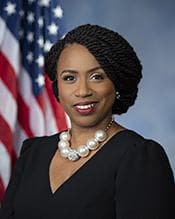
- Introduced
- 10/5/2026
- Last activity
- 10/5/2026 — Referred to the House Committee on Financial Services.
- Sponsored by
- Ayanna Pressley
- Cosponsors
- - 1 - 0
- Introduced
- In Committee
What this bill would do
This bill requires large bank holding companies with at least $50 billion in assets to reduce their greenhouse gas emissions linked to investments and financial services. Covered banks must submit and implement plans to cut these emissions by 50 percent by January 1, 2035, and reach zero emissions by January 1, 2050. The legislation also forces banks to stop financing new or expanded fossil fuel projects and thermal coal very quickly. Additionally, the Federal Reserve must report to Congress on emissions levels and how the transition affects workers and communities. Finally, the bill gives regulators the power to penalize noncompliant banks by forcing asset sales or terminating their deposit insurance.
Yes· 3 of 14
Does this cut the pollution that drives climate change?+8
The bill mandates that large bank holding companies cut their financed greenhouse gas emissions by 50 percent by 2035 and reach zero by 2050.
Does this better protect air, water and wildlife?+7
The legislation requires enhanced due diligence on biodiversity and community impacts, and eliminates financing for deforestation risk commodities.
Does this give the federal government more power?+6
The bill grants federal regulators significant new powers to mandate emission plans, require asset divestitures, and penalize noncompliant bank holding companies.
The opposite· 3 of 7
Does this reduce how much oil, gas and coal is produced?-9
The bill mandates the rapid discontinuation of thermal coal financing and halts all new or expanded fossil fuel project financing.
Would union members be better off under this?-5
Union workers in coal, oil, and gas extraction face job losses and economic dislocation from the rapid phase-out of fossil fuel financing.
Would business owners be better off under this?-4
Business owners in the fossil fuel sector and related industries face severe financing restrictions and potential operational burdens.
Who it would affect, and how
Potential Positive Impacts for People
-
Section 2 (adding Section 15(c)(4)(A) of the Bank Holding Company Act of 1956): Banks are required to prioritize withdrawing funding from companies and projects that negatively impact the health and well-being of low-income and minority communities, which could lead to cleaner local environments.
-
Section 2 (adding Section 15(c)(4)(B) of the Bank Holding Company Act of 1956): Banks must prioritize lending to companies that provide severance, retraining, and other benefits to workers who are impacted by the transition away from fossil fuels.
-
Section 4(b): The Federal Reserve is required to report to Congress on the equitable transition needs, economic impacts, and groups of people affected by moving to a zero-emission economy, which helps hold officials accountable for protecting everyday people.
Potential Negative Impacts for People
-
Section 2 (adding Section 15(e) of the Bank Holding Company Act of 1956): If a bank fails to follow its emission reduction plan, regulators can force the bank to sell off assets or allow the Federal Deposit Insurance Corporation to terminate the insured status of the bank's depository institution, which could cause major financial disruptions for customers.
-
Section 2 (adding Section 15(c)(1)(D) through (F) of the Bank Holding Company Act of 1956): Banks must completely stop financing thermal coal immediately and halt all fossil fuel financing and new projects by specified deadlines, which could create severe economic burdens and job losses for workers in fossil fuel industries and communities dependent on those jobs.
Groups and Interests Ranking
Every group the model scored this bill for, from -10 to +10. Hover a score for the reason it gave.
- Governance And Ideology
- Increases Federal Power+6Improves Government Transparency+5
- Demographic And Interest Groups
- Good For Low Income Households+4Good For African Americans+3Good For Children+3Good For Hispanic Americans+3Good For Native Americans+3Good For Urban Residents+2Good For Young Adults+2Good For Union Workers-5Good For Business Owners-4Good For Rural Residents-3
- Environment Energy And Infrastructure
- Reduces Carbon Emissions+8Improves Environmental Protections+7Increases Renewable Energy Investment+6Reduces Fossil Fuel Production-9Reduces Gas Prices-4
- Social Issues And Justice
- Improves Racial Equity+4Improves Poverty Reduction+2
- Economy And Finance
- Improves Economic Growth-3Improves Small Business Support-2
- 10/5/2026
- Referred to the House Committee on Financial Services.
- 1 Cosponsor added.
- Introduced in House
 Rashida Tlaib
Democrat · Michigan