Bill · H.R. 10697· House(119-HR-10697)
No Troops in Our Streets Act of 2026
- Introduced
- 10/1/2026
- Last activity
- 10/1/2026 — Referred to the Committee on the Judiciary, and in addition to the Committees on Armed Services, Rules, Appropriations, and the Budget, for a period to be subsequently determined by the Speaker, in each case for consideration of such provisions as fall within the jurisdiction of the committee concerned.
- Sponsored by
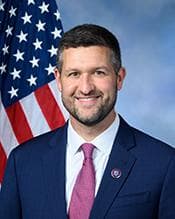
- Patrick Ryan
- Cosponsors
- - 5 - 0
- Introduced
- In Committee
What this bill would do
This bill amends titles 18 and 10 of the United States Code to give Congress the authority to terminate exceptions to the prohibition on using the Army, Navy, Marine Corps, Air Force, and Space Force as posse comitatus. It establishes a specific legislative tool called a joint resolution of disapproval to stop military deployments or National Guard activations. The bill outlines expedited procedures for how the Senate and the House of Representatives must handle these resolutions. Additionally, it appropriates funding for fiscal year 2026 for state and local law enforcement activities, including specific grant programs and community violence initiatives. Finally, it prohibits the use of these newly appropriated funds to assign federal law enforcement personnel to states and localities.
Yes· 3 of 6
Does this change how police departments operate?+3
The bill provides grant funding for community violence intervention and local law enforcement support.
Does this leave more decisions to the states?+3
The bill empowers Congress to terminate exceptions to posse comitatus and restricts federal force deployments in states.
Is this likely to lift people out of poverty?+2
Funding for community violence intervention initiatives can aid underserved communities.
The opposite
Does this give the federal government more power?-2
The bill restricts federal law enforcement assignments to states and localities.
Does this reduce what the federal government spends?-2
The bill appropriates substantial additional funds for law enforcement and community grants.
Who it would affect, and how
Potential Positive Impacts for People
-
Section 2(a) introduces congressional authority to terminate exceptions to the posse comitatus prohibition by enacting a joint resolution of disapproval. This could benefit individuals by providing elected officials with a direct check on military deployments within communities.
-
Section 2(b) amends title 10 to allow Congress to terminate National Guard activations under section 12406 through a joint resolution of disapproval. This gives the people's representatives a clear mechanism to halt certain military actions.
-
Section 3(a)(1) appropriates $600,000,000 for the Edward Byrne Memorial Justice Assistance Grant program. This provides financial support for state and local law enforcement activities.
-
Section 3(a)(2) appropriates $150,000,000 for a community violence intervention and prevention initiative. This funding could benefit communities by supporting programs aimed at reducing violence.
-
Section 3(b) appropriates $100,000,000 for grants to hire and rehire additional career law enforcement officers. This provision directly supports local police departments in staffing their forces.
Potential Negative Impacts for People
- Section 3(c) explicitly prohibits any of the newly appropriated funds from being used to fund the assignment of federal law enforcement personnel to states and localities. This restricts the use of federal personnel to assist local jurisdictions, which could be viewed as a negative outcome by communities seeking federal manpower assistance.
Groups and Interests Ranking
Every group the model scored this bill for, from -10 to +10. Hover a score for the reason it gave.
- Social Issues And Justice
- Improves Policing Reform+3Improves Poverty Reduction+2
- Governance And Ideology
- Increase States Rights+3Improves Government Transparency+2Increases Federal Power-2
- Demographic And Interest Groups
- Good For Urban Residents+2
- Economy And Finance
- Increases Job Creation+2Reduces Government Spending-2
- 10/1/2026
- Referred to the Committee on the Judiciary, and in addition to the Committees on Armed Services, Rules, Appropriations, and the Budget, for a period to be subsequently determined by the Speaker, in each case for consideration of such provisions as fall within the jurisdiction of the committee concerned.
- 5 Cosponsors added.
- Introduced in House
 Christopher Deluzio
Democrat · Pennsylvania
 Maggie Goodlander
Democrat · New Hampshire
 Chrissy Houlahan
Democrat · Pennsylvania
 Jimmy Panetta
Democrat · California
 Eugene Vindman
Democrat · Virginia