Bill · H.R. 10686· House(119-HR-10686)
Community Disaster Protection Act
- Introduced
- 10/1/2026
- Last activity
- 10/1/2026 — Referred to the House Committee on Financial Services.
- Sponsored by
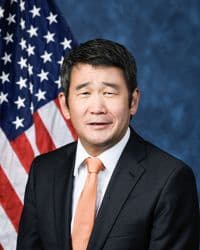
- Dave Min
- Cosponsors
- - 20 - 0
- Introduced
- In Committee
What this bill would do
This bill directs the Department of Homeland Security and FEMA to create a pilot grant program for community-based catastrophe insurance. Under this program, grants will be awarded to states, tribes, local governments, and non-profits to design and implement community-wide insurance options for natural disasters. The goal is to help cover risks that traditional property insurance does not handle well, stabilize the private insurance market, and promote disaster resilience. The bill outlines specific rules for policy requirements, consumer disclosures, and coordination with state insurance regulators. It also requires the Government Accountability Office to submit reports evaluating the effectiveness of the pilot programs. The grant program is authorized to receive $20,000,000 for each fiscal year from 2027 through 2031, terminating on September 30, 2031.
Yes· 3 of 22
Does this improve help for people hit by a disaster?+6
The bill directs FEMA to establish a pilot grant program for community-based catastrophe insurance to improve post-disaster recovery.
Does this give people more protection from unfair business practices?+5
The bill mandates clear, plain-language consumer disclosures regarding coverage, deductibles, and parametric risks.
Would households on low incomes be better off under this?+4
The bill focuses on addressing coverage gaps and affordability constraints for households facing high financial exposure to natural disasters.
The opposite
No question was scored the opposite.
Who it would affect, and how
Potential Positive Impacts for People
-
Consumer Outreach and Research Funding: Section 2(b)(1) and Section 2(b)(2) allow grant recipients to use funds for consumer research, outreach, education, and enrollment. This is positive because it helps everyday people better understand their insurance options, coverage gaps, and financial risks related to natural disasters.
-
Clear Consumer Disclosures: Section 2(c)(1)(C) requires community-based insurance products to provide clear, plain-language disclosures about covered perils, exclusions, deductibles, and how the policy interacts with traditional insurance or disaster assistance. This benefits the public by ensuring consumers know exactly what they are buying and what to expect after a disaster hits.
-
Disaster Resilience Incentives: Section 2(c)(1)(E) requires programs to promote or incentivize community-wide and individual measures to reduce potential losses and increase disaster resilience. This can help people protect their homes and lower their long-term disaster risks.
-
Streamlined Claims and Payouts: Section 2(c)(1)(F) and Section 2(c)(3)(B) encourage streamlined claims processes and parametric programs that provide timely fixed or graduated payments when predetermined disaster triggers are met. This is a positive outcome for individuals who need fast financial help to recover after a catastrophe.
Potential Negative Impacts for People
-
Potential Basis Risk in Parametric Programs: Section 2(c)(1)(G) and Section 2(i)(3) allow programs to operate using parametric triggers, which carries "basis risk"—defined as the potential difference between the actual loss a person suffers and the payout they receive from the program. This could negatively impact individuals if a disaster occurs and their payout does not fully cover their actual financial losses.
-
Premium Costs and Financial Sustainability: Section 2(c)(1)(D) requires premiums to be actuarially sound, and Section 2(b)(8) discusses the eventual need for long-term financial sustainability after the pilot program concludes. If non-Federal financial support or premium assistance runs out, individuals could face higher, unaffordable out-of-pocket premium costs to maintain their coverage.
Groups and Interests Ranking
Every group the model scored this bill for, from -10 to +10. Hover a score for the reason it gave.
- Demographic And Interest Groups
- Good For Low Income Households+4Good For Middle Class Households+4Good For Native Americans+4Good For Rural Residents+4Good For Business Owners+3Good For Children+3Good For Farmers+3Good For Middle Aged+3Good For Retirees+3Good For Seniors+3Good For Young Adults+3
- Environment Energy And Infrastructure
- Improves Disaster Relief And F E M A+6Improves Rural Development+4Improves Environmental Protections+3
- Economy And Finance
- Improves Consumer Protection+5Improves Small Business Support+4Improves Economic Growth+3
- Social Issues And Justice
- Improves Poverty Reduction+4Improves Affordable Housing+3Reduces Homelessness+2
- Governance And Ideology
- Improves Government Transparency+4Increase States Rights+3
- 10/9/2026
- 3 Cosponsors added.
- 10/5/2026
- 3 Cosponsors added.
- 10/1/2026
- Referred to the House Committee on Financial Services.
- 14 Cosponsors added.
- Introduced in House
 Suzanne Bonamici
Democrat · Oregon
 Ami Bera
Democrat · California
 Ed Case
Democrat · Hawaii
 Kathy Castor
Democrat · Florida
 Steve Cohen
Democrat · Tennessee
 Gilbert Cisneros
Democrat · California
 Maxine Dexter
Democrat · Oregon
 Timothy Kennedy
Democrat · New York
 Mike Levin
Democrat · California
 Kevin Mullin
Democrat · California
 Johnny Olszewski
Democrat · Maryland
 Chellie Pingree
Democrat · Maine
 Jimmy Panetta
Democrat · California
 Mike Quigley
Democrat · Illinois
 Deborah Ross
Democrat · North Carolina
 Andrea Salinas
Democrat · Oregon
 Lateefah Simon
Democrat · California
 Shri Thanedar
Democrat · Michigan
 Nikema Williams
Democrat · Georgia
 Debbie Wasserman Schultz
Democrat · Florida