Bill · H.R. 1067· House(119-HR-1067)
LITTLE Act of 2025
- Introduced
- 2/6/2025
- Last activity
- 2/6/2025 — Referred to the House Committee on Ways and Means.
- Sponsored by
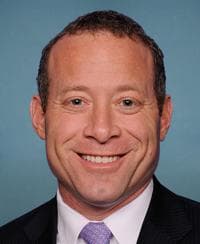
- Josh Gottheimer
- Cosponsors
- None
- Introduced
- In Committee
What this bill would do
This bill, known as the "LITTLE Act of 2025," proposes changes to the Internal Revenue Code regarding childcare. It establishes a new childcare provider startup credit intended for qualified taxpayers who provide services to two or more children. The legislation also modifies the household and dependent care credit by increasing the amount and making it refundable. It defines qualifying individuals, including dependents under age 13 or those physically/mentally incapable of self-care. Additionally, the bill sets specific dollar limits and earned income limitations for these employment-related expenses.
Yes· 3 of 11
Does this make child care cost less?+8
The bill increases the credit amount for childcare expenses and introduces a startup credit for providers to expand services.
Would households on low incomes be better off under this?+7
The bill makes the childcare credit refundable and increases the amount available for qualifying expenses.
Would business owners be better off under this?+6
The childcare provider startup credit offers a significant tax incentive for those starting new childcare businesses.
The opposite
No question was scored the opposite.
Who it would affect, and how
Potential Positive Impacts for People
-
Support for New Childcare Businesses: Qualified taxpayers can receive a credit equal to 30 percent of their qualified childcare startup expenses, up to a total of $10,000 (Section 2(a)).
-
Increased Assistance for Working Families: The bill increases the amount of the credit for employment-related expenses, which includes household services and the care of qualifying individuals (Section 3(a)(1)).
-
Financial Relief through Refundability: The household and dependent care credit is made refundable, and the amount of the credit can be up to $7,500 for one qualifying individual or $15,000 for two or more qualifying individuals (Section 3(a)(1) and Section 3(c)).
-
Inflation Protection: The dollar amounts established for the credit are subject to an annual increase based on cost-of-living adjustments (Section 3(e)(1)).
Potential Negative Impacts for People
-
Limits on Startup Credits: The childcare provider startup credit is capped at an aggregate amount of $10,000 for any taxpayer across all taxable years (Section 2(a)(d)).
-
Income-Based Reductions: The applicable percentage for the employment-related expense credit decreases as the taxpayer's adjusted gross income increases above $15,000 (Section 3(a)(2)).
-
Strict Documentation Requirements: To claim the credit, taxpayers must provide the name, address, and taxpayer identification number of the service provider, or the name and address if it is a 501(c)(3) organization (Section 3(f)(9)).
-
Income Caps on Credits: The amount of employment-related expenses that can be considered for the credit is limited by the taxpayer's (or spouse's) earned income (Section 3(d)(1)).
Groups and Interests Ranking
Every group the model scored this bill for, from -10 to +10. Hover a score for the reason it gave.
- Demographic And Interest Groups
- Good For Low Income Households+7Good For Business Owners+6Good For Children+5Good For Middle Class Households+5Good For Women+5
- Economy And Finance
- Improves Small Business Support+6Reduces Middle Class Taxes+5Increases Job Creation+4Improves Economic Growth+3
- Social Issues And Justice
- Improves Childcare Affordability+8Improves Poverty Reduction+4
- 2/6/2025
- Referred to the House Committee on Ways and Means.
- Introduced in House