Bill · H.R. 10638· House(119-HR-10638)
Skills Against Violence Act of 2026
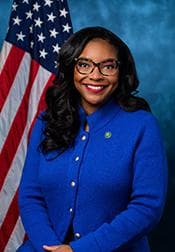
- Introduced
- 9/28/2026
- Last activity
- 9/28/2026 — Referred to the House Committee on Education and Workforce.
- Sponsored by
- Emilia Sykes
- Cosponsors
- None
- Introduced
- In Committee
What this bill would do
This bill is known as the Skills Against Violence Act of 2026. It sets up a gender-based violence survivor workforce program. The Director of the Office on Violence Against Women will give out grants to states, local governments, Indian tribes, and nonprofit groups. These groups must have a history of working effectively on domestic violence, sexual assault, or stalking. The money is used to help survivors of violence, abuse, and harassment find and keep jobs. The bill authorizes $40,000,000 for each fiscal year from 2026 through 2030 to fund this program.
Yes· 3 of 12
Would women be better off under this?+6
The gender-based violence survivor workforce program primarily benefits women, who statistically represent the majority of survivors of domestic and sexual violence.
Does this narrow the gap between how men and women are treated?+6
The bill establishes a workforce program specifically aimed at supporting survivors of gender-based violence, predominantly assisting women.
Would households on low incomes be better off under this?+5
The bill provides critical financial, employment, and supportive services to individuals and dependents who are often economically vulnerable.
The opposite
Does this reduce what the federal government spends?-2
The bill authorizes $40,000,000 in appropriations for each of fiscal years 2026 through 2030.
Who it would affect, and how
Potential Positive Impacts for People
-
Employment Assistance: Under Section 2, subsection (b)(1), grant funds can be used for activities that help survivors get jobs. This includes employment counseling, occupational training, job retention counseling, and re-entry counseling, which benefits people trying to rebuild their work lives.
-
Outreach Services: Under Section 2, subsection (b)(2) and (b)(3), funds can be used for outreach to make survivors aware of available services and to connect them with employers who support safe workspaces. This helps individuals find secure and supportive employment environments.
-
Supportive Services: Under Section 2, subsection (b)(4), programs can provide essential support services such as child care, disability care, elder care, transportation, professional clothing and equipment, legal services, and mental health or gender-based violence counseling. This directly helps individuals overcome common barriers to working.
Potential Negative Impacts for People
- The provided text does not contain any explicit mentions of negative consequences, burdens, or potential harms for individuals or groups of people in the United States resulting from this bill.
Groups and Interests Ranking
Every group the model scored this bill for, from -10 to +10. Hover a score for the reason it gave.
- Demographic And Interest Groups
- Good For Women+6Good For Low Income Households+5Good For Young Adults+4Good For People With Disabilities+3
- Social Issues And Justice
- Improves Gender Equality+6Improves Poverty Reduction+5Improves Childcare Affordability+4Reduces Homelessness+3
- Healthcare
- Improves Mental Health Access+5Improves Healthcare Access+3
- Governance And Ideology
- Improves Government Transparency+3
- Economy And Finance
- Increases Job Creation+4Reduces Government Spending-2
- 9/28/2026
- Referred to the House Committee on Education and Workforce.
- Introduced in House