Bill · H.R. 10620· House(119-HR-10620)
Barron’s Law
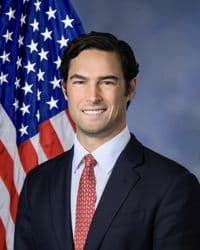
- Introduced
- 9/28/2026
- Last activity
- 9/28/2026 — Referred to the House Committee on Transportation and Infrastructure.
- Sponsored by
- Brandon Gill
- Cosponsors
- - 5 - 0
- Introduced
- In Committee
What this bill would do
The Trucking Safety and Accountability Act of 2026 aims to strengthen commercial motor vehicle safety and accountability. It requires commercial driver's license applicants to verify their lawful immigration status and employment authorization. The bill establishes standardized English language proficiency assessments for commercial drivers. It also introduces measures to prevent chameleon carriers from evading safety sanctions and regulations. Additionally, the legislation enforces cabotage restrictions on foreign motor carriers operating in the United States. Finally, the bill sets up reporting requirements and pilot programs to track compliance and monitor implementation.
Yes· 3 of 7
Does this tighten control of the border?+6
The bill enforces cabotage restrictions on foreign motor carriers and verifies the lawful immigration status of commercial driver's license applicants.
Does this repair or build roads and bridges?+5
The bill enhances commercial motor vehicle safety standards, accountability, and driver qualification requirements to improve highway safety.
Does this give the federal government more power?+4
The legislation imposes federal mandates on state commercial driver's license issuance and withholds highway funds for noncompliance.
The opposite· 3 of 4
Would immigrants be better off under this?-5
The legislation introduces stringent immigration status verification requirements and restrictions for commercial driver's license applicants.
Does this leave more decisions to the states?-4
States face federal penalties, including the withholding of highway funds, if they fail to comply with federal cabotage enforcement mandates.
Does this make it easier for immigrants already here to become citizens?-4
The bill restricts commercial driver's licenses exclusively to individuals with verified lawful immigration and employment authorization status.
Who it would affect, and how
Potential Positive Impacts for People
-
Section 2: Requires commercial driver's license applicants to be U.S. citizens, lawful permanent residents, or otherwise authorized under Federal law to engage in employment that includes driving a commercial motor vehicle, which ensures that only legally authorized individuals operate these vehicles.
-
Section 3: Requires States to mandate that each commercial driver's license applicant pass a standardized English language proficiency assessment before issuance or renewal, ensuring drivers can safely read road signs, understand emergency communications, and complete required documentation.
-
Section 4: Prohibits chameleon carriers by denying registration to applicants whose previous registrations were revoked within the past three years, which prevents unsafe operators from hiding their compliance history under a new corporate identity.
-
Section 5: Establishes heavy civil penalties of at least $25,000, or at least $100,000 if it results in serious injury or death, for motor carriers that knowingly employ or contract with ineligible operators, holding employers accountable for who they put behind the wheel.
-
Section 6: Prohibits foreign motor carriers from engaging in unauthorized domestic point-to-point transportation within the United States, protecting domestic transportation standards and penalizing violators with up to $100,000 per vehicle daily.
Potential Negative Impacts for People
-
Section 4: Imposes criminal penalties, including a fine of up to $25,000, imprisonment for up to one year, or both, for any person who knowingly makes a materially false statement, conceals a material relationship, or uses a successor entity to evade federal motor safety sanctions.
-
Section 6: Mandates that the Secretary of Transportation withhold 10 percent of certain federal highway funds from any State that fails to cooperate with federal authorities in enforcing cabotage restrictions, which could reduce transportation funding for noncompliant States.
Groups and Interests Ranking
Every group the model scored this bill for, from -10 to +10. Hover a score for the reason it gave.
- Environment Energy And Infrastructure
- Improves Roads And Bridges+5
- Governance And Ideology
- Improves Government Transparency+4Increases Federal Power+4Increase States Rights-4
- Economy And Finance
- Improves Small Business Support+3
- National Security And Foreign Policy
- Improves International Trade-3
- Demographic And Interest Groups
- Good For Business Owners+4Good For Union Workers+3Good For Immigrants-5
- Social Issues And Justice
- Improves Border Security+6Improves Pathway To Citizenship-4
- 10/1/2026
- 2 Cosponsors added.
- 9/28/2026
- Referred to the House Committee on Transportation and Infrastructure.
- 3 Cosponsors added.
- Introduced in House
 Ken Calvert
Republican · California
 Lance Gooden
Republican · Texas
 Keith Self
Republican · Texas
 Randy Weber
Republican · Texas
 Roger Williams
Republican · Texas