Bill · H.R. 10562· House(119-HR-10562)
Students Not Profits Act of 2026
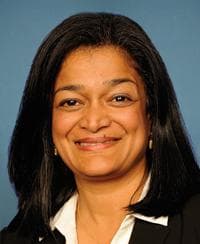
- Introduced
- 9/24/2026
- Last activity
- 9/24/2026 — Referred to the House Committee on Education and Workforce.
- Sponsored by
- Pramila Jayapal
- Cosponsors
- - 4 - 0
- Introduced
- In Committee
What this bill would do
The bill, known as the Students Not Profits Act of 2026, amends the Higher Education Act of 1965 to make for-profit institutions ineligible for Federal student aid. It sets new rules for what counts as an institution of higher education, including limits on distance education, incarcerated students, and students without secondary diplomas. The legislation prohibits tuition-sharing payments for recruitment services and requires personal liability for school leaders when an institution closes or faces successful borrower defense claims. Additionally, the bill establishes a formal process for schools to convert to nonprofit status and creates a monitoring office within the Department of Education.
Yes· 3 of 8
Would students be better off under this?+7
Students benefit significantly from enhanced protections against predatory practices, transparent nonprofit conversions, and bans on tuition-sharing recruitment.
Does this make what the government does easier for the public to see?+7
The bill mandates strict transparency requirements, including public notice and comment periods in the Federal Register for school nonprofit conversion applications.
Does this give people more protection from unfair business practices?+7
The bill protects students from predatory recruitment and enrollment practices by banning tuition-sharing for recruitment and tightening standards for higher education institutions.
The opposite
Would business owners be better off under this?-6
Owners and operators of for-profit institutions face severe restrictions, including ineligibility for federal student aid and personal financial liability upon school closure.
Who it would affect, and how
Potential Positive Impacts for People
-
Protection from Predatory Practices: Under Section 2, amending section 101(e) of the Higher Education Act, schools cannot receive federal student aid if their owners or executive officers have been convicted of title IV funding crimes, committed fraud, engaged in predatory recruitment, violated consumer protection laws, or been involved with an institution that closed. This protects students from being taken advantage of by bad actors in school leadership.
-
Clear Standards for Nonprofit Conversions: Under Section 7, adding section 124 to the Act, schools wanting to convert to nonprofit status must apply and prove they meet strict transparency and financial fairness rules. This provision stops fake nonprofit conversions that secretly benefit former owners, ensuring that nonprofit schools truly operate for the public good.
-
Ban on Tuition-Sharing for Recruitment: Under Section 4, amending section 487(a)(20) of the Act, schools are banned from making payments to outside entities for recruitment services when the payment amount is based on the tuition generated. This protects students from aggressive and manipulative enrollment tactics driven by financial commissions.
Potential Negative Impacts for People
-
Reduced Options for Certain Students: Under Section 2, amending section 101(d) of the Act, schools must limit distance education courses to no more than 50 percent of all students, limit incarcerated students to no more than 25 percent, and limit students without secondary diplomas to no more than 50 percent to qualify for federal student aid. These strict enrollment caps could limit access to higher education for individuals who rely heavily on online learning or prison education programs.
-
Loss of Federal Aid at For-Profit Schools: Under Section 2, by making for-profit institutions ineligible for Federal student aid, current students attending these specific schools may lose access to federal loans and grants. This could force students to disrupt their education or find alternative funding sources to stay enrolled.
Groups and Interests Ranking
Every group the model scored this bill for, from -10 to +10. Hover a score for the reason it gave.
- Demographic And Interest Groups
- Good For Students+7Good For Low Income Households+6Good For Young Adults+6Good For Business Owners-6
- Governance And Ideology
- Improves Government Transparency+7Increases Federal Power+6
- Economy And Finance
- Improves Consumer Protection+7
- Social Issues And Justice
- Improves Poverty Reduction+6
- Education And Technology
- Increases Public School Funding+5
- 9/24/2026
- Referred to the House Committee on Education and Workforce.
- 4 Cosponsors added.
- Introduced in House
 Jesús García
Democrat · Illinois
 Chellie Pingree
Democrat · Maine
 Ayanna Pressley
Democrat · Massachusetts
 Rashida Tlaib
Democrat · Michigan