Bill · H.R. 10519· House(119-HR-10519)
To direct the Secretary of Homeland Security, acting through the Director of the Cybersecurity and Infrastructure Security Agency, to establish a Critical Infrastructure AI Cyber Defense Pilot Program, and for other purposes.
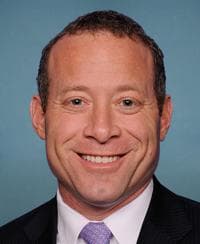
- Introduced
- 9/21/2026
- Last activity
- 9/21/2026 — Referred to the House Committee on Homeland Security.
- Sponsored by
- Josh Gottheimer
- Cosponsors
- - 2 - 2
- Introduced
- In Committee
What this bill would do
This bill directs the Secretary of Homeland Security to set up a Critical Infrastructure AI Cyber Defense Pilot Program. Under this program, critical infrastructure owners and operators can use artificial intelligence and technical assistance provided by the Secretary to protect and fix cybersecurity vulnerabilities. The Secretary must prioritize not-for-profit, publicly owned, rural, and small-sized critical infrastructure. The bill authorizes $100,000,000 for fiscal years 2027 through 2031 to carry out these efforts. The Secretary must also submit regular reports to Congress and the Comptroller General. Finally, the program will end five years after the enactment of the Act.
Yes· 3 of 7
Does this better protect the country from computer attacks?+7
The bill directs the establishment of a pilot program to help critical infrastructure protect against and remediate cybersecurity vulnerabilities using artificial intelligence.
Does this make it easier to run a small business?+6
The bill establishes a program providing AI and technical assistance to critical infrastructure, explicitly prioritizing small-sized entities.
Would business owners be better off under this?+5
Owners and operators of critical infrastructure, particularly small-sized and not-for-profit entities, benefit directly from cybersecurity grants and AI assistance.
The opposite
Does this reduce what the federal government spends?-2
The bill authorizes $100,000,000 in appropriations for fiscal years 2027 through 2031 to fund the cyber defense pilot program.
Who it would affect, and how
Potential Positive Impacts for People
-
Section 1(a): Participating owners and operators of critical infrastructure can securely utilize artificial intelligence and technical assistance provided by the Secretary to protect against, detect, test for, and remediate cybersecurity vulnerabilities, which helps keep essential systems safe.
-
Section 1(c): The Secretary must prioritize owners and operators of critical infrastructure that are not-for-profit, publicly owned, rural, or small-sized, ensuring that smaller and community-focused groups get help first.
-
Section 1(d): The Secretary must submit regular reports to Congress and the Comptroller General detailing the number of grants awarded, the grant amounts, and the identity of the recipients, which holds officials accountable for how the money is spent.
Potential Negative Impacts for People
- The provided text does not contain any specific sections or provisions outlining negative consequences or burdens for individuals or groups of people in the United States.
Groups and Interests Ranking
Every group the model scored this bill for, from -10 to +10. Hover a score for the reason it gave.
- Demographic And Interest Groups
- Good For Business Owners+5Good For Rural Residents+5
- National Security And Foreign Policy
- Improves Cybersecurity Defense+7
- Environment Energy And Infrastructure
- Improves Rural Development+5
- Governance And Ideology
- Improves Government Transparency+5
- Economy And Finance
- Improves Small Business Support+6Reduces Government Spending-2
- Education And Technology
- Increases Scientific Research Funding+4
- 9/21/2026
- Referred to the House Committee on Homeland Security.
- 4 Cosponsors added.
- Introduced in House
 Don Bacon
Republican · Nebraska
 Greg Landsman
Democrat · Ohio
 Zachary Nunn
Republican · Iowa
 Hillary Scholten
Democrat · Michigan