Bill · H.R. 10469· House(119-HR-10469)
Regional Energy Hubs Act of 2026
- Introduced
- 9/16/2026
- Last activity
- 9/16/2026 — Referred to the House Committee on Energy and Commerce.
- Sponsored by
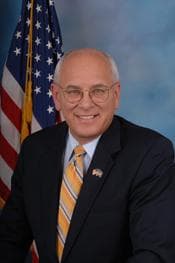
- Paul Tonko
- Cosponsors
- None
- Introduced
- In Committee
What this bill would do
This bill amends the Energy Policy and Conservation Act to create financial assistance for States and Indian Tribes to establish and maintain regional energy hubs. These hubs are designed to increase public awareness of and access to energy and energy efficiency programs. The legislation aims to improve energy affordability, community resilience, and energy security. Energy hubs will conduct outreach, support low- and moderate-income community members, and connect people with local energy professionals and job training resources. The bill authorizes appropriations of $50,000,000 for each of fiscal years 2027 through 2031 to carry out these activities.
Yes· 3 of 34
Would households on low incomes be better off under this?+6
The bill explicitly targets low- and moderate-income community members to help them participate in energy assistance and weatherization programs.
Would Native Americans be better off under this?+6
The bill sets aside at least 5 percent of available funding directly for Indian Tribes to establish regional energy hubs.
Would people in rural areas be better off under this?+5
The bill specifically targets underserved rural communities for energy hub deployment and community engagement.
The opposite
No question was scored the opposite.
Who it would affect, and how
Potential Positive Impacts for People
-
Equitable Access in Vulnerable Areas: Section 367(b)(2) ensures that States and Indian Tribes provide an appropriate geographic distribution of energy hubs to guarantee equitable access to services in disadvantaged communities and underserved rural communities. This helps ensure that historically overlooked populations can benefit from energy programs.
-
Support for Energy Affordability and Assistance Programs: Section 367(c)(6) requires energy hubs to address energy affordability challenges by helping low- and moderate-income community members participate in specific assistance programs, such as the Low-Income Home Energy Assistance Act of 1981, the Weatherization Assistance Program, and programs under the Inflation Reduction Act. This provision directly assists individuals in reducing their energy use and costs.
-
Health and Safety Improvements: Section 367(c)(8) allows energy hubs to support access to nonenergy efficiency building rehabilitation resources, including lead and mold abatement resources. This helps enable energy efficiency measures while directly improving the living conditions and health of residents.
-
Job Training and Workforce Development: Section 367(c)(9) directs energy hubs to coordinate with workforce development organizations, labor organizations, and educational institutions to connect community members to job training, pre-apprenticeships, apprenticeships, and employment resources. This provision creates clear pathways for local individuals to secure employment in the energy sector.
Potential Negative Impacts for People
- Reporting and Administrative Burdens: Section 367(f) requires the lead organization of each energy hub to submit an annual written report detailing partnerships, outreach activities, workforce development efforts, energy savings estimates, and a regional assessment. Smaller community-based organizations acting as lead organizations might find these continuous data collection and reporting requirements burdensome or costly to fulfill.
Groups and Interests Ranking
Every group the model scored this bill for, from -10 to +10. Hover a score for the reason it gave.
- Demographic And Interest Groups
- Good For Low Income Households+6Good For Native Americans+6Good For Rural Residents+5Good For African Americans+4Good For Children+4Good For Hispanic Americans+4Good For Middle Class Households+4Good For Retirees+4Good For Seniors+4Good For Union Workers+4Good For Veterans+4Good For Young Adults+4Good For Business Owners+3Good For Farmers+3Good For Middle Aged+3Good For People With Disabilities+3Good For Students+3Good For Urban Residents+3Good For Women+3
- Environment Energy And Infrastructure
- Improves Rural Development+5Increases Renewable Energy Investment+5Reduces Carbon Emissions+5Improves Environmental Protections+4
- Social Issues And Justice
- Improves Affordable Housing+4Improves Poverty Reduction+4Improves Racial Equity+4Improves Gender Equality+3
- Economy And Finance
- Increases Job Creation+5Improves Small Business Support+4Improves Economic Growth+3
- Governance And Ideology
- Improves Government Transparency+3Increase States Rights+3Increases Federal Power+2
- Healthcare
- Improves Healthcare Access+3
- 9/16/2026
- Referred to the House Committee on Energy and Commerce.
- Introduced in House