Bill · H.R. 10466· House(119-HR-10466)
End Energy Hardship Act
- Introduced
- 9/16/2026
- Last activity
- 9/16/2026 — Referred to the House Committee on Energy and Commerce.
- Sponsored by
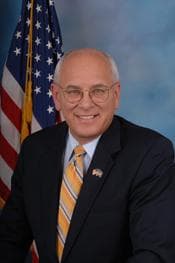
- Paul Tonko
- Cosponsors
- None
- Introduced
- In Committee
What this bill would do
This legislation directs the Secretary of Energy to create a program that provides funding to electric and natural gas utility providers. The primary goal is to help these utility companies eliminate unpaid residential customer bills and support long-term energy affordability programs. Under the first phase of the program, utility providers receive competitive grants to clear out old customer debt, prioritizing past-due balances, low-income households, and vulnerable populations. Participating utilities must also stop late fees, debt collections, and service disconnections for the accounts receiving this debt relief. A second phase distributes any remaining funds as equal credits directly to all residential customers served by the participating utilities. The bill also authorizes billions of dollars in appropriations to fund these relief efforts, technical assistance, and federal data collection through 2031.
Yes· 3 of 9
Would households on low incomes be better off under this?+7
Low-income households benefit directly from targeted debt elimination, moratoria on disconnections, and capped monthly energy percentage payments.
Does this give people more protection from unfair business practices?+6
The bill mandates debt relief, late fee bans, and service disconnection protections for residential utility customers.
Would children be better off under this?+5
Households with young children under age six are explicitly prioritized for utility debt relief under the legislation.
The opposite
Does this reduce what the federal government spends?-5
The legislation creates a new federally funded program that authorizes up to $25 billion plus annual appropriations through 2031.
Does this reduce what the federal government owes?-4
The bill authorizes billions of dollars in federal appropriations, increasing government expenditures and national debt.
Would business owners be better off under this?-3
For-profit utility distribution companies face federal regulatory conditions, compliance costs, and required matching funds to participate.
Who it would affect, and how
Potential Positive Impacts for People
-
Elimination of Unpaid Utility Arrears: Under section 2(b)(3)(A), utility providers that receive funding are required to use it to eliminate the unpaid or overdue balances of residential customers. This directly relieves everyday people of heavy debt burdens tied to their essential heating and electricity services.
-
Protection for Vulnerable Populations: Section 2(b)(3)(B) establishes a strict prioritization list for clearing debt, giving special attention first to past-due accounts, second to low-income households based on the Federal poverty level or state median income, and third to households containing senior citizens, disabled individuals, young children, or people with medical conditions requiring utility service. This ensures the most at-risk citizens get help first.
-
Moratorium on Disconnections and Late Fees: Section 2(b)(4)(C) explicitly mandates that utilities receiving funds must stop issuing late fees, halt debt collections, and stop disconnecting service for residential customers whose arrears are expected to be covered by the program. This protects struggling families from losing power or heat while relief is processed.
-
Caps on Monthly Energy Costs: Under section 2(j)(5)(D), the Qualified Percentage of Income Payment Program limits monthly charges for enrolled low-income customers to a fixed, manageable percentage of their gross household income, capping total costs at no more than 6 percent. This prevents utility bills from consuming an unmanageable share of a family's earnings.
Potential Negative Impacts for People
- Taxpayer Burden from Billions in Spending: Section 2(i) authorizes massive appropriations of up to $25,000,000,000 for utility debt relief phases and an additional $1,000,000,000 for each fiscal year from 2027 through 2031 for technical assistance and reporting. Everyday taxpayers will ultimately shoulder the cost of these federally funded programs.
Groups and Interests Ranking
Every group the model scored this bill for, from -10 to +10. Hover a score for the reason it gave.
- Demographic And Interest Groups
- Good For Low Income Households+7Good For Children+5Good For People With Disabilities+5Good For Seniors+5Good For Middle Class Households+2Good For Business Owners-3
- Social Issues And Justice
- Improves Poverty Reduction+5
- Environment Energy And Infrastructure
- Improves Rural Development+4
- Economy And Finance
- Improves Consumer Protection+6Reduces Government Spending-5Reduces National Debt-4
- Governance And Ideology
- Increases Federal Power+3
- 9/16/2026
- Referred to the House Committee on Energy and Commerce.
- Introduced in House