Bill · H.R. 10402· House(119-HR-10402)
Good Energy Jobs Act of 2026
- Introduced
- 9/15/2026
- Last activity
- 9/15/2026 — Referred to the Committee on Energy and Commerce, and in addition to the Committee on Science, Space, and Technology, for a period to be subsequently determined by the Speaker, in each case for consideration of such provisions as fall within the jurisdiction of the committee concerned.
- Sponsored by
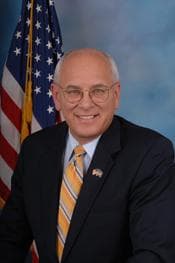
- Paul Tonko
- Cosponsors
- - 1 - 0
- Introduced
- In Committee
What this bill would do
The bill, known as the Good Energy Jobs Act of 2026, amends the Department of Energy Organization Act to place new rules on financial assistance provided by the Department of Energy. It requires projects receiving this financial assistance to meet specific labor standards, including paying prevailing wages and utilizing registered apprenticeships. Entities receiving funds must also remain neutral regarding labor organizations and employee organizing efforts. Additionally, the legislation mandates community benefits plans, promotes domestic manufacturing, and seeks to direct a portion of funding to small and disadvantaged communities. Finally, the bill sets up strict reporting requirements and outlines penalties for noncompliance.
Yes· 3 of 20
Would union members be better off under this?+8
The legislation significantly enhances protections, prevailing wage requirements, labor neutrality, and project labor agreements for union workers.
Does this strengthen the rights of workers to organise?+7
The legislation strengthens worker rights by mandating labor neutrality, prevailing wages, and project labor agreements.
Would households on low incomes be better off under this?+5
The bill directs at least 40 percent of covered financial assistance to small and disadvantaged communities with high concentrations of low-income households.
The opposite
No question was scored the opposite.
Who it would affect, and how
Potential Positive Impacts for People
-
Section 664(a) requires that all laborers and mechanics on construction, alteration, maintenance, or repair projects assisted by the Department of Energy are paid at least prevailing wages. This ensures workers receive fair, locally appropriate pay for their labor.
-
Section 664(b) mandates that at least 15 percent of total labor hours on covered projects are performed by individuals in a registered apprenticeship program, alongside proper apprentice-to-journey worker ratios. This creates pathways for workers to learn trades and build stable careers.
-
Section 666(a) requires project labor agreements for facility construction, alteration, maintenance, or repair costing more than $1,000,000. These agreements can establish clear employment conditions and seek to include goals for local hiring and the participation of women, people of color, veterans, and other underrepresented workers under Section 666(b).
-
Section 667(a) requires entities applying for project financial assistance to include a community benefits plan informed by a community needs assessment. This provision helps ensure that local communities have a voice, address pollution, and secure measurable benefits such as job quality and infrastructure access.
-
Section 669(b) and (e) require entities receiving research, development, or demonstration funds to commit to manufacturing products substantially in the United States and prohibit offshoring the manufacturing of products developed with this assistance to a foreign country without prior approval. This protects domestic manufacturing jobs.
-
Section 670(a) directs the Secretary to ensure that at least 40 percent of financial assistance through specific programs goes to entities providing specific, measurable, and meaningful benefits to small or disadvantaged communities. This targets investments toward historically disinvested or polluted areas.
Potential Negative Impacts for People
-
Section 664(c), Section 665(c), Section 666(d), Section 667(f), and Section 669(d) empower the Secretary to withhold, recapture, or terminate financial assistance if an entity fails to comply with labor standards, neutrality requirements, project labor agreements, community benefit plans, or domestic manufacturing plans. While intended to enforce rules, these penalties could disrupt projects and potentially halt funding for ongoing initiatives if compliance issues arise.
-
Section 669(e) restricts entities from relocating, transferring, or outsourcing product manufacturing to a foreign country during the assistance term or for five years after without prior approval from the Secretary. This restriction limits business flexibility regarding global supply chains and manufacturing locations.
Groups and Interests Ranking
Every group the model scored this bill for, from -10 to +10. Hover a score for the reason it gave.
- Demographic And Interest Groups
- Good For Union Workers+8Good For Low Income Households+5Good For African Americans+4Good For Hispanic Americans+4Good For Middle Class Households+4Good For Native Americans+4Good For Rural Residents+4Good For Young Adults+4Good For Veterans+3Good For Women+3
- Economy And Finance
- Improves Union Protections+7Increases Job Creation+5Improves Economic Growth+3Improves Small Business Support+2
- Social Issues And Justice
- Improves Poverty Reduction+4Improves Racial Equity+4Improves Gender Equality+3
- Environment Energy And Infrastructure
- Improves Rural Development+4Increases Renewable Energy Investment+4
- Governance And Ideology
- Improves Government Transparency+5
- 9/15/2026
- Referred to the Committee on Energy and Commerce, and in addition to the Committee on Science, Space, and Technology, for a period to be subsequently determined by the Speaker, in each case for consideration of such provisions as fall within the jurisdiction of the committee concerned.
- 1 Cosponsor added.
- Introduced in House
 Nikki Budzinski
Democrat · Illinois