Bill · H.R. 10373· House(119-HR-10373)
Protecting Workers' Wages from Medical Debt Act
- Introduced
- 9/14/2026
- Last activity
- 9/14/2026 — Referred to the House Committee on Education and Workforce.
- Sponsored by
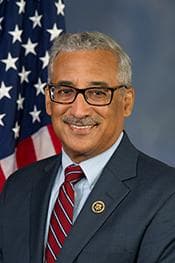
- Robert Scott
- Cosponsors
- - 5 - 0
- Introduced
- In Committee
What this bill would do
This bill is called the Protecting Workers' Wages from Medical Debt Act. It stops the garnishment of employee wages for the payment of medical debt. The bill applies this ban across all United States and State courts, as well as State officers and agencies. Medical debt is defined as debt arising from items and services furnished by a health care facility or provider. The legislation also repeals section 10 of the Fair Labor Standards Act of 1938. Finally, the bill takes effect six months after its enactment.
Yes· 3 of 25
Would households on low incomes be better off under this?+9
Provides critical financial relief by preventing wage seizure for medical debts.
Would people with disabilities be better off under this?+8
Highly beneficial for individuals with chronic conditions who are more likely to accrue medical debt.
Would middle-income households be better off under this?+6
Prevents medical debt from destabilizing household income.
The opposite
Does this leave more decisions to the states?-4
Limits the ability of State courts and agencies to enforce medical debt judgments.
Who it would affect, and how
Potential Positive Impacts for People
- Section 2, amending the Fair Labor Standards Act by adding SEC. 8. PROHIBITION ON WAGE GARNISHMENT FOR MEDICAL DEBTS., stops employee wages from being subject to garnishment for medical debt, which protects workers from having their paychecks reduced for this reason.
Potential Negative Impacts for People
- Based on the provided text, there are no explicitly stated negative impacts or burdens identified for individuals or groups.
Groups and Interests Ranking
Every group the model scored this bill for, from -10 to +10. Hover a score for the reason it gave.
- Demographic And Interest Groups
- Good For Low Income Households+9Good For People With Disabilities+8Good For Middle Class Households+6Good For African Americans+5Good For Hispanic Americans+5Good For Native Americans+5Good For Immigrants+4Good For Middle Aged+4Good For Women+4Good For Young Adults+4Good For Asian Americans+3Good For Farmers+3Good For L G B T Q Community+3Good For Men+3Good For Rural Residents+3Good For Seniors+3Good For Students+3Good For Union Workers+3Good For Urban Residents+3Good For Veterans+3Good For White Americans+3
- Social Issues And Justice
- Improves Poverty Reduction+6Reduces Homelessness+3
- Economy And Finance
- Improves Consumer Protection+5
- Governance And Ideology
- Increases Federal Power+4Increase States Rights-4
- 10/9/2026
- 1 Cosponsor added.
- 9/24/2026
- 2 Cosponsors added.
- 9/14/2026
- Referred to the House Committee on Education and Workforce.
- 2 Cosponsors added.
- Introduced in House
 Greg Casar
Democrat · Texas
 Adelita Grijalva
Democrat · Arizona
 Summer Lee
Democrat · Pennsylvania
 Ilhan Omar
Democrat · Minnesota
 Frederica Wilson
Democrat · Florida