Bill · H.R. 10318· House(119-HR-10318)
PACMESA
- Introduced
- 9/8/2026
- Last activity
- 9/8/2026 — Referred to the House Committee on Natural Resources.
- Sponsored by
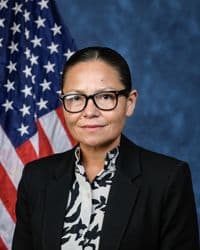
- Kimberlyn King-Hinds
- Cosponsors
- None
- Introduced
- In Committee
What this bill would do
The Pacific Minerals Economic Security Act aims to improve the economic security of Pacific territories near seabed mining. It amends the Outer Continental Shelf Lands Act to require specific financial assurances from lessees, including an initial bond and supplemental bonds for production. The bill also mandates a study on environmental impact mitigation methods for seabed mining. Furthermore, it establishes a revenue-sharing system where 50 percent of covered leasing revenues are distributed to specific covered territories. These funds are intended for coastal restoration, infrastructure, environmental mitigation, or debt reduction. Finally, the Act requires notice and opportunities for comment to the Governors of adjacent territories regarding certain plans.
Yes· 3 of 17
Does this repair or build roads and bridges?+5
Explicitly allocates funds for the development and maintenance of infrastructure in covered territories.
Does this better protect air, water and wildlife?+4
Requires surety bonds for environmental restoration and mandates environmental impact studies.
Does this invest in rural communities?+4
Directly supports the economic and physical development of remote Pacific territories.
The opposite
Would business owners be better off under this?-3
Increases costs for mining companies through prohibited royalty relief and mandatory bonds.
Who it would affect, and how
Potential Positive Impacts for People
-
Revenue Sharing for Territories: The bill mandates that 50 percent of covered leasing revenues be deposited into a special account for distribution to Guam, American Samoa, and the Commonwealth of the Northern Mariana Islands (Section 2(a)(5)(A)). This provides direct financial benefits to these Pacific territories.
-
Targeted Use of Funds: Funds received by covered territories must be used for specific beneficial purposes, such as coastal restoration, infrastructure development (including energy), environmental mitigation, or fiscal stabilization/debt reduction (Section 2(a)(5)(C)).
-
Financial Security and Accountability: The bill requires lessees to provide an initial surety bond of at least $100,000 and a supplemental bond based on factors like decommissioning and environmental restoration costs (Section 2(a)(2)(3)(A-B)). This helps ensure that obligations are met.
-
Environmental Research and Consultation: The Secretary must conduct a study on environmental impact mitigation methods, consulting with institutions like Northern Marianas College, the University of Guam, and American Samoa Community College (Section 2(a)(2)(4)).
-
Increased Local Oversight: The Secretary of the Interior must provide notice to the Governors of adjacent territories regarding certain plans and invite them to review and comment on environmental assessments (Section 2(b)(1-2)).
Potential Negative Impacts for People
-
No Royalty Relief: The bill prohibits the Secretary from reducing, suspending, or waiving any cash bonuses, rentals, or royalties due from a lease (Section 2(a)(2)(2)). This removes a potential tool for relief during lease terms.
-
Financial Burdens for Lessees: Companies must provide significant financial assurances, including an initial bond and a supplemental bond that accounts for decommissioning and environmental restoration (Section 2(a)(2)(3)). This represents a required financial outlay before and during production activities.
Groups and Interests Ranking
Every group the model scored this bill for, from -10 to +10. Hover a score for the reason it gave.
- Environment Energy And Infrastructure
- Improves Roads And Bridges+5Improves Environmental Protections+4Improves Rural Development+4Improves Public Land Management+3Increases Renewable Energy Investment+2
- Governance And Ideology
- Increase States Rights+4Improves Government Transparency+3Increases Federal Power+2
- Demographic And Interest Groups
- Good For Rural Residents+4Good For Asian Americans+3Good For Low Income Households+2Good For Students+2Good For Business Owners-3
- Economy And Finance
- Improves Economic Growth+3Improves Fiscal Responsibility+2Increases Job Creation+2
- Education And Technology
- Increases Scientific Research Funding+3
- Social Issues And Justice
- Improves Poverty Reduction+2
- 9/8/2026
- Referred to the House Committee on Natural Resources.
- Introduced in House