Bill · H.R. 10316· House(119-HR-10316)
National Housing Emergency Act of 2026
- Introduced
- 9/8/2026
- Last activity
- 9/8/2026 — Referred to the Committee on Financial Services, and in addition to the Committee on Transportation and Infrastructure, for a period to be subsequently determined by the Speaker, in each case for consideration of such provisions as fall within the jurisdiction of the committee concerned.
- Sponsored by
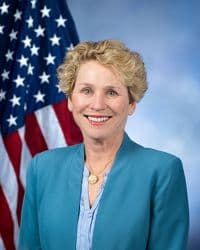
- Chrissy Houlahan
- Cosponsors
- None
- Introduced
- In Committee
What this bill would do
The National Housing Emergency Act of 2026 asks the President to declare a national housing emergency and use the Defense Production Act to increase the supply of housing materials. The bill aims to remove various federal regulatory barriers and environmental review requirements for housing projects. It establishes a "Pro-Growth Requirement" that states and local governments must meet to receive certain Federal block grant funding. Additionally, it prohibits local governments from implementing land-use regulations that substantially burden housing construction. The emergency status ends once 4,000,000 housing units are added or by October 1, 2031.
Yes· 3 of 21
Does this make housing cost less?+9
Aims to add 4 million housing units and removes barriers to duplexes, triplexes, and accessory units.
Is this likely to create jobs?+8
The bill estimates it could unlock nearly 2,000,000 jobs, including 700,000 construction jobs.
Would households on low incomes be better off under this?+7
Focuses on affordable housing and expanding the supply of low-cost options like manufactured homes.
The opposite
Does this better protect air, water and wildlife?-7
Removes federal environmental review requirements for many housing preservation and infill projects.
Does this leave more decisions to the states?-7
Prohibits states and local governments from implementing land-use regulations that burden housing construction.
Does this repair or build roads and bridges?-3
States may lose surface transportation block grant funding if they fail the Pro-Growth Requirement.
Who it would affect, and how
Potential Positive Impacts for People
-
Increased Housing Supply: By using the Defense Production Act to increase materials for construction and rehabilitation, the bill seeks to address a shortage of at least 4,000,000 units (Section 2).
-
Job Creation and Economic Growth: The bill finds that closing the housing shortfall can unlock nearly 2,000,000 jobs, including 700,000 construction jobs, and add nearly $2,000,000,000,000 to the GDP through 2035 (Section 3).
-
Faster Construction: The bill removes several regulatory barriers, limits environmental reviews to a single review for projects using multiple Federal programs, and expedites the Build America, Buy America Act waiver process (Section 5).
-
Increased Housing Options: The "Pro-Growth Requirement" encourages local governments to allow manufactured homes, duplexes, triplexes, fourplexes, and accessory dwelling units in areas zoned for single-family homes (Section 7).
Potential Negative Impacts for People
-
Reduced Environmental Oversight: The bill states that no housing preservation or infill project funded by the Department of Housing and Urban Development shall be subject to any Federal environmental review requirements (Section 5).
-
Loss of Local Funding: State or local governments may lose Federal block grant funding, such as surface transportation funding, if they fail to meet the "Pro-Growth Requirement" (Section 7).
-
Restriction of Local Authority: The bill prohibits any State or local government from implementing land-use regulations that impose a substantial burden on housing construction or rehabilitation (Section 8).
Groups and Interests Ranking
Every group the model scored this bill for, from -10 to +10. Hover a score for the reason it gave.
- Demographic And Interest Groups
- Good For Low Income Households+7Good For Middle Class Households+6Good For Urban Residents+6Good For Young Adults+6Good For Business Owners+5Good For Union Workers+5Good For Middle Aged+4Good For Rural Residents+4Good For Seniors+4
- Economy And Finance
- Increases Job Creation+8Improves Economic Growth+7Improves Small Business Support+4Reduces Inflation+3
- Social Issues And Justice
- Improves Affordable Housing+9Reduces Homelessness+6Improves Poverty Reduction+4
- Environment Energy And Infrastructure
- Improves Rural Development+4Improves Public Transit+3Improves Disaster Relief And F E M A+2Improves Public Land Management+2Improves Environmental Protections-7Improves Roads And Bridges-3
- Governance And Ideology
- Increases Federal Power+7Increase States Rights-7
- 9/8/2026
- Referred to the Committee on Financial Services, and in addition to the Committee on Transportation and Infrastructure, for a period to be subsequently determined by the Speaker, in each case for consideration of such provisions as fall within the jurisdiction of the committee concerned.
- Introduced in House