Bill · H.R. 10294· House(119-HR-10294)
Better Pay for American Workers Act
- Introduced
- 9/3/2026
- Last activity
- 9/3/2026 — Referred to the House Committee on Education and Workforce.
- Sponsored by
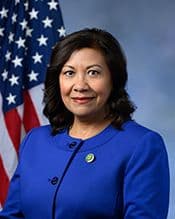
- Norma Torres
- Cosponsors
- None
- Introduced
- In Committee
What this bill would do
This bill, called the "Better Pay for American Workers Act," aims to increase the minimum wage by amending the Fair Labor Standards Act of 1938. It sets a schedule to raise the wage to $15.00 by January 1, 2027, $17.50 by January 1, 2028, and $20.00 by January 1, 2029. Starting January 1, 2030, the minimum wage will be determined annually by the Secretary. These annual updates will be based on the percentage increase in the median hourly wage of all employees as reported by the Bureau of Labor Statistics.
Yes· 3 of 24
Would households on low incomes be better off under this?+10
The bill directly increases the income of the lowest earners in the economy.
Does this raise the lowest wage an employer may pay?+10
The bill explicitly raises the minimum wage to $20.00 by 2029 and indexes it to the median wage thereafter.
Is this likely to lift people out of poverty?+8
Increasing the floor for hourly wages directly raises the income of the lowest-paid workers, aiding poverty reduction.
The opposite· 3 of 4
Would business owners be better off under this?-7
Increases payroll expenses for all businesses employing minimum-wage workers.
Would farmers be better off under this?-5
Agricultural employers will face significantly higher labor costs.
Does this make it easier to run a small business?-5
Increasing the minimum wage significantly increases labor costs for small business owners.
Who it would affect, and how
Potential Positive Impacts for People
-
Higher Hourly Pay: Workers would see their minimum wage increase to $15.00 in 2027, $17.50 in 2028, and $20.00 in 2029 (Section 2(a)(1)).
-
Automatic Annual Adjustments: Starting in 2030, the wage will be adjusted annually based on the median hourly wage of all employees, ensuring the rate is updated by the Secretary (Section 2(a)(1)(D) and Section 2(h)(1)).
Potential Negative Impacts for People
- No negative impacts for people are explicitly mentioned in the provided text.
Groups and Interests Ranking
Every group the model scored this bill for, from -10 to +10. Hover a score for the reason it gave.
- Demographic And Interest Groups
- Good For Low Income Households+10Good For Students+7Good For Women+6Good For Young Adults+6Good For African Americans+5Good For Hispanic Americans+5Good For Immigrants+5Good For Native Americans+5Good For Men+4Good For People With Disabilities+4Good For Rural Residents+4Good For Urban Residents+4Good For Asian Americans+3Good For L G B T Q Community+3Good For Middle Aged+3Good For Veterans+3Good For White Americans+3Good For Union Workers+2Good For Business Owners-7Good For Farmers-5
- Social Issues And Justice
- Improves Poverty Reduction+8Reduces Homelessness+3Improves Gender Equality+2Improves Racial Equity+2
- Economy And Finance
- Increases Minimum Wage+10Improves Small Business Support-5
- Governance And Ideology
- Increases Federal Power+4Increase States Rights-4
- 9/3/2026
- Referred to the House Committee on Education and Workforce.
- Introduced in House