Bill · H.R. 10259· House(119-HR-10259)
DHS Community Consultation Act of 2026
- Introduced
- 9/3/2026
- Last activity
- 9/3/2026 — Referred to the Committee on the Judiciary, and in addition to the Committees on Homeland Security, and Armed Services, for a period to be subsequently determined by the Speaker, in each case for consideration of such provisions as fall within the jurisdiction of the committee concerned.
- Sponsored by
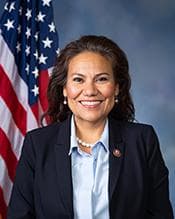
- Veronica Escobar
- Cosponsors
- None
- Introduced
- In Committee
What this bill would do
The DHS Community Consultation Act of 2026 establishes requirements for the Secretary of Homeland Security before building or leasing immigration detention facilities. The Secretary must consult with local officials, stakeholders, and community members regarding potential impacts on local infrastructure and services. The bill requires holding public meetings and a 60-day period for public comment and review. Additionally, it mandates coordination with public health authorities for disease outbreak protocols. Local governments can prohibit the construction of these facilities through official declarations. Finally, the act prohibits using certain existing structures or military installations for detention purposes.
Yes· 3 of 4
Does this make what the government does easier for the public to see?+6
The bill requires public meetings and a 60-day public comment period for detention facility construction.
Does this leave more decisions to the states?+5
The bill empowers local governments to block the construction of detention facilities via local ordinances.
Would people in cities be better off under this?+5
The bill allows municipalities to prohibit the construction of detention facilities within their borders.
The opposite
Does this give the federal government more power?-3
The bill limits federal discretion by granting local governments authority to prohibit detention facilities.
Who it would affect, and how
Potential Positive Impacts for People
-
Increased Community Transparency: The Secretary is required to consult with local government, community leaders, business leaders, and advocates, and must hold public meetings to allow community members to meet with representatives from DHS, CBP, and ICE (Section 2(a)(1), 2(a)(3)).
-
Infrastructure Protection: The Secretary must determine the impacts a facility may have on healthcare, emergency services, water and wastewater infrastructure, electric power grids, and roads (Section 2(a)(2)).
-
Public Oversight: The bill establishes a 60-day period for public comment and review, and requires the Secretary to respond to comments received (Section 2(a)(4), 2(a)(5)).
-
Local Autonomy: If a local government issues an ordinance, proclamation, or moratorium prohibiting such facilities, the Secretary may not construct the facility in that municipality (Section 2(b)).
-
Public Health Safety: In the event of a contagious disease outbreak, the Secretary must coordinate with local public health authorities to establish protocols for treatment, care, containment, prevention, and community notification (Section 2(c)).
-
Limitation of Unsuitable Facilities: The Secretary is prohibited from retrofitting or renovating existing structures that were not originally intended to house people, such as warehouses or commercial spaces (Section 3(a)).
-
Protection of Military Lands: The bill prohibits the construction or operation of detention facilities on United States military installations (Section 3(b)).
Potential Negative Impacts for People
- No negative impacts are explicitly stated in the provided text.
Groups and Interests Ranking
Every group the model scored this bill for, from -10 to +10. Hover a score for the reason it gave.
- Governance And Ideology
- Improves Government Transparency+6Increase States Rights+5Increases Federal Power-3
- Demographic And Interest Groups
- Good For Urban Residents+5
- Healthcare
- Improves Pandemic Preparedness+5
- 9/3/2026
- Referred to the Committee on the Judiciary, and in addition to the Committees on Homeland Security, and Armed Services, for a period to be subsequently determined by the Speaker, in each case for consideration of such provisions as fall within the jurisdiction of the committee concerned.
- Introduced in House