Bill · H.R. 1023· House(119-HR-1023)
RIFA Act
- Introduced
- 2/5/2025
- Last activity
- 2/5/2025 — Referred to the House Committee on Education and Workforce.
- Sponsored by
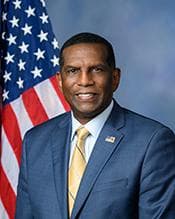
- Burgess Owens
- Cosponsors
- - 1 - 0
- Introduced
- In Committee
What this bill would do
The "Reporting on Investments in Foreign Adversaries Act" (RIFA Act) aims to amend the Higher Education Act of 1965. It requires specific private institutions of higher education to disclose certain foreign investments held within their endowments. These institutions must file annual reports detailing investments of concern, including their market value and capital gains. The bill mandates the creation of a searchable, public database to host these reports. It also establishes strict enforcement through civil actions and significant fines for non-compliance. Finally, institutions that repeatedly violate these rules may lose eligibility to participate in federal higher education programs.
Who it would affect, and how
Potential Positive Impacts for People
-
Increased Transparency: The bill requires the Secretary to establish and maintain a searchable, public database where all submitted reports are made available in electronic and downloadable formats (Section 2(a)(h)). This allows the public to identify and compare investment data.
-
Accountability for Institutions: Institutions must designate a compliance officer who is responsible for personally certifying that the reported information is accurate (Section 2(a)(g)).
-
Monitoring of Risks: The Secretary, after consulting with the Secretary of the Treasury and the SEC, can establish procedures to certify whether pooled investments are holding investments of concern, providing a mechanism to clarify investment types (Section 2(a)(c)).
Potential Negative Impacts for People
-
Heavy Financial Penalties: Institutions that knowingly or willfully fail to comply face significant fines. First-time violators can be fined between 50% and 100% of the aggregate value of their investments of concern plus any value from sales during that year; subsequent violators face fines between 100% and 200% (Section 2(a)(i)(4)).
-
Loss of Federal Program Eligibility: An institution that violates these requirements for three consecutive institutional fiscal years will be ineligible to participate in programs authorized by the Higher Education Act for at least two years (Section 2(b)).
-
Increased Compliance Costs: Institutions are required to designate and maintain a compliance officer to certify the accuracy of their reports (Section 2(a)(g)). Additionally, institutions compelled to comply through a civil action must pay the full costs of investigation and enforcement to the United States Treasury (Section 2(a)(i)(3)(A)).
Groups and Interests Ranking
Every group the model scored this bill for, from -10 to +10. Hover a score for the reason it gave.
No significant interests or groups are affected by this bill.
- 2/5/2025
- Referred to the House Committee on Education and Workforce.
- 1 Cosponsor added.
- Introduced in House
One bill Congress.gov lists as related to this one — companions in the other chamber, earlier versions, and bills this one absorbed or was folded into.
 Mark Harris
Republican · North Carolina