Bill · H.R. 10181· House(119-HR-10181)
Stop Predator Dumping Act
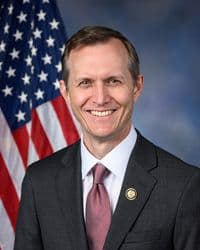
- Introduced
- 8/27/2026
- Last activity
- 8/27/2026 — Referred to the House Committee on the Judiciary.
- Sponsored by
- George Whitesides
- Cosponsors
- None
- Introduced
- In Committee
What this bill would do
The ``Stop Predator Dumping Act'' aims to create a national placement framework and grant program to prevent the disproportionate concentration of individuals conditionally released after civil commitment. It requires covered States to establish placement rules regarding distance, sequential placement, and population caps in large counties. The Attorney General is tasked with conducting a study on the geographic distribution of these individuals and identifying systemic factors of concentration. Following the study, the Attorney General must compile and distribute best practices for equitable distribution. Finally, the bill authorizes a grant program to help States implement and administer these best practices.
Yes· 3 of 4
Does this give the federal government more power?+3
The bill expands federal oversight through DOJ studies and grant-based implementation requirements for state placement frameworks.
Would people in cities be better off under this?+2
By capping concentration in large counties, it may reduce the perceived burden on specific urban districts.
Would people in rural areas be better off under this?+2
The bill includes study into preventing disproportionate burdens on rural communities.
The opposite
Does this leave more decisions to the states?-2
The bill imposes new mandatory placement requirements and distance standards on states.
Who it would affect, and how
Potential Positive Impacts for People
-
Distance Requirement: This provision prevents a covered individual from being placed within a 10-mile radius of another covered individual, which could help prevent high concentrations of individuals in specific residential areas (Section 3(a)(1)).
-
Sequential Placement: This requires States to place individuals in county subdivisions that currently have fewer covered individuals, which could lead to a more balanced distribution across a county (Section 3(a)(2)).
-
Large County Cap: In counties with more than 1,000,000 people, this prevents any single subdivision or district from containing more than 25 percent of the total covered individuals, which may reduce the burden on specific local areas (Section 3(a)(3)).
-
SVP Best Practices Implementation Grant Program: This provides funds to help States implement and monitor policies that align with best practices for equitable geographic distribution (Section 5).
Potential Negative Impacts for People
-
Burden of Compliance: States must establish and enforce a specific placement framework including distance, sequential, and population requirements, which involves creating and enforcing new rules for the placement of covered individuals (Section 3).
-
Administrative and Operational Costs: While grants are available, States are required to submit applications and certify that they are actively adopting and integrating best practices to be eligible for funding (Section 5(b)).
Groups and Interests Ranking
Every group the model scored this bill for, from -10 to +10. Hover a score for the reason it gave.
- Demographic And Interest Groups
- Good For Rural Residents+2Good For Urban Residents+2
- Governance And Ideology
- Increases Federal Power+3Improves Government Transparency+2Increase States Rights-2
- 8/27/2026
- Referred to the House Committee on the Judiciary.
- Introduced in House