Bill · H.R. 10156· House(119-HR-10156)
Better Jobs through Evidence and Innovation Act
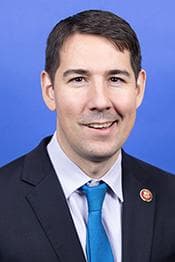
- Introduced
- 8/27/2026
- Last activity
- 8/27/2026 — Referred to the House Committee on Education and Workforce.
- Sponsored by
- Josh Harder
- Cosponsors
- - 1 - 0
- Introduced
- In Committee
What this bill would do
The Better Jobs through Evidence and Innovation Act establishes a Workforce Development Innovation Fund. This fund allows the Secretary to award competitive grants to various eligible entities for workforce development programs. These grants support the implementation, expansion, and evaluation of evidence-based programs designed to improve employment and training services. The bill outlines different grant phases, including early-phase, mid-phase, and expansion grants. It also sets specific standards for evidence levels to ensure program effectiveness. The Act authorizes appropriations for fiscal years 2027 through 2031.
Yes· 3 of 18
Would households on low incomes be better off under this?+6
The bill focuses on individuals with barriers to employment, who often fall into low-income categories.
Would people with disabilities be better off under this?+5
The bill targets programs that assist individuals with barriers to employment, which includes those with disabilities.
Would people in rural areas be better off under this?+5
The bill specifically mentions improving the cost-effectiveness of services for rural communities.
The opposite
No question was scored the opposite.
Who it would affect, and how
Potential Positive Impacts for People
-
Improved Earnings and Employment: The bill targets programs that generate demonstrated sustained improvements in earnings and employment outcomes for participants (Section 2(a)(1)(A)(i)(I)).
-
Support for Individuals with Barriers: The legislation specifically focuses on improving services for individuals who face barriers to employment (Section 2(a)(1)(A)(i)(I) and Section 2(a)(1)(D)(i)(I)).
-
Increased Access and Opportunities: The program aims to increase access to and opportunities for employment, education, training, and support services (Section 2(a)(1)(A)(i)(II)(aa)).
-
Benefits for Rural Communities: The bill seeks to improve the cost-effectiveness of programs for communities that are not sufficiently served by existing models, specifically mentioning rural areas (Section 2(a)(1)(A)(i)(II)(cc)).
-
Addressing Labor Market Needs: The grants are intended to help address the specific needs of employers and the labor market (Section 2(a)(1)(A)(i)(II)(bb)).
Potential Negative Impacts for People
-
Funding Restrictions on Implementation: Eligible entities are required to use at least 60 percent of their award for direct program implementation, which limits how the remaining funds can be used (Section 2(a)(1)(B)(iii)(iv)).
-
Limited Funding for Early Stages: The Secretary is directed to use no more than 25 percent of the funds for early-phase grants (Section 2(a)(1)(E)(ii)).
Groups and Interests Ranking
Every group the model scored this bill for, from -10 to +10. Hover a score for the reason it gave.
- Demographic And Interest Groups
- Good For Low Income Households+6Good For People With Disabilities+5Good For Rural Residents+5Good For Business Owners+4Good For Students+3Good For Middle Aged+2Good For Middle Class Households+2Good For Union Workers+2Good For Urban Residents+2Good For Young Adults+2
- Economy And Finance
- Increases Job Creation+5Improves Economic Growth+3Improves Fiscal Responsibility+2
- Environment Energy And Infrastructure
- Improves Rural Development+5
- Social Issues And Justice
- Improves Poverty Reduction+4
- Education And Technology
- Increases Scientific Research Funding+3
- Governance And Ideology
- Improves Government Transparency+1Increases Federal Power+1
- 8/27/2026
- Referred to the House Committee on Education and Workforce.
- 1 Cosponsor added.
- Introduced in House
One bill Congress.gov lists as related to this one — companions in the other chamber, earlier versions, and bills this one absorbed or was folded into.
 Lucy McBath
Democrat · Georgia