Bill · H.R. 10152· House(119-HR-10152)
Open-Source AI Leadership Act
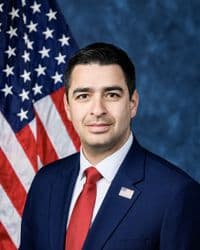
- Introduced
- 8/27/2026
- Last activity
- 9/16/2026 — Ordered to be Reported by the Yeas and Nays: 26 - 21.
- Sponsored by
- Gabe Evans
- Cosponsors
- None
- Introduced
What this bill would do
The Open-Source AI Leadership Act directs the Secretary of Commerce to support the use of American open artificial intelligence models. To achieve this, the Secretary can designate points of contact, remove barriers, and enter into agreements with private entities, agencies, or foreign partners. The bill also requires the Secretary to identify and publicly report on risks associated with foreign adversary models. These risks include threats to personal information, supply chain security, and national security. A report comparing foreign models to qualified open models must be published annually. This reporting requirement is set to end 10 years after the Act's enactment.
Yes· 3 of 18
Would business owners be better off under this?+8
Provides significant support for AI startups and businesses adopting American open models.
Does this make it easier to run a small business?+7
Specifically directs the Secretary of Commerce to enter into agreements with startups to support AI adoption.
Does this better protect the country from computer attacks?+6
Requires identifying and reporting security risks and supply chain vulnerabilities posed by foreign adversary AI models.
The opposite
No question was scored the opposite.
Who it would affect, and how
Potential Positive Impacts for People
-
Support for American AI Development: The Secretary is tasked with supporting the adoption and use of qualified open models through actions like developing policy, identifying barriers, and entering into agreements with private sector entities and startups (Section 2).
-
Increased Transparency Regarding Foreign Risks: The Secretary must identify and make known risks related to foreign adversary models, such as threats to the confidentiality and integrity of personal and proprietary information (Section 3(a)(2)).
-
Protection of National and Economic Security: The bill directs the assessment of risks involving the development of chemical, biological, radiological, or nuclear capabilities, as well as risks to the national security and economic security of the United States (Section 3(a)(6)).
-
Protection of Information Integrity: The Secretary is required to assess risks related to the output of foreign adversary models regarding historical accuracy, scientific inquiry, and freedom of expression (Section 3(a)(4)).
Potential Negative Impacts for People
- No Provisions Found: The provided text does not explicitly list specific provisions that would result in negative consequences or burdens for individuals or groups of people.
Groups and Interests Ranking
Every group the model scored this bill for, from -10 to +10. Hover a score for the reason it gave.
- Governance And Ideology
- Improves Government Transparency+5Improves Interstate Commerce+4Improves Privacy Rights+4Increase States Rights+3Improves Freedom Of Speech+2Increases Federal Power+2
- Economy And Finance
- Improves Small Business Support+7Improves Economic Growth+5Increases Job Creation+4Improves Consumer Protection+3
- Demographic And Interest Groups
- Good For Business Owners+8Good For Young Adults+5Good For Students+4
- National Security And Foreign Policy
- Improves Cybersecurity Defense+6Improves International Trade+4Improves International Alliances+3
- Education And Technology
- Improves Data Privacy+5
- Social Issues And Justice
- Improves Freedom Of Speech+2
- 9/16/2026
- Committee Consideration and Mark-up Session Held
- Ordered to be Reported by the Yeas and Nays: 26 - 21.
- 9/1/2026
- Subcommittee Consideration and Mark-up Session Held
- Forwarded by Subcommittee to Full Committee by Voice Vote.
- 8/27/2026
- Referred to the House Committee on Energy and Commerce.
- Referred to the Subcommittee on Commerce, Manufacturing, and Trade.
- Introduced in House