Bill · H.R. 10105· House(119-HR-10105)
Stop ICE Price Gouging Act
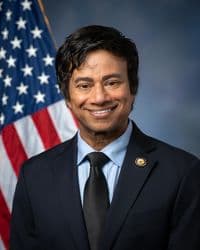
- Introduced
- 8/13/2026
- Last activity
- 8/14/2026 — Referred to the Subcommittee on Border Security and Enforcement.
- Sponsored by
- Shri Thanedar
- Cosponsors
- None
- Introduced
- In Committee
What this bill would do
The ``Stop ICE Price Gouging Act'' aims to cap the prices of items sold at immigration detention facility commissaries. It limits the markup on essential items to 5 percent and nonessential items to 35 percent above the vendor's price. The bill prohibits additional service fees and prevents agencies or contractors from receiving kickbacks or sharing revenue. It establishes enforcement mechanisms, including refund requirements for overcharged individuals and oversight by the Inspector General. Additionally, the Director of U.S. Immigration and Customs Enforcement must submit regular reports to Congress regarding markups and violations.
Yes
Would immigrants be better off under this?+8
The bill significantly reduces the cost of essential goods for detained immigrants.
Does this give people more protection from unfair business practices?+7
The bill protects detainees from price gouging by capping markups on commissary items.
Does this make what the government does easier for the public to see?+5
The bill requires regular reporting to Congress to ensure transparency in commissary pricing.
The opposite
Would business owners be better off under this?-5
The bill limits profit margins and imposes stricter oversight on commissary vendors.
Who it would affect, and how
Potential Positive Impacts for People
-
Lower Costs for Essential Items: The sale price for essential items—such as hygiene products, soap, and undergarments—is capped at a 5-percent markup above what was paid to the vendor (Section 2(a)(1)).
-
Lower Costs for Nonessential Items: The sale price for any item not deemed essential is capped at a 35-percent markup (Section 2(a)(2)).
-
Prevention of Hidden Fees: The bill prohibits any additional fees, such as service fees or commissions, during commissary sales transactions (Section 2(b)(1)).
-
Refunds for Overcharges: If an individual is charged more than the allowed limit, the Director of U.S. Immigration and Customs Enforcement must ensure they receive a refund (Section 2(c)(1)).
-
Creation of a Detainee Welfare Fund: If an individual cannot be refunded due to transfer or removal, the excess funds are deposited into a special account to be used for electronics, recreational, educational, or other items and programs that benefit detainees (Section 2(c)(2)).
Potential Negative Impacts for People
- No specific negative impacts are explicitly stated in the provided text.
Groups and Interests Ranking
Every group the model scored this bill for, from -10 to +10. Hover a score for the reason it gave.
- Economy And Finance
- Improves Consumer Protection+7
- Governance And Ideology
- Improves Government Transparency+5
- Demographic And Interest Groups
- Good For Immigrants+8Good For Business Owners-5
- 8/14/2026
- Referred to the Subcommittee on Border Security and Enforcement.
- 8/13/2026
- Referred to the Committee on the Judiciary, and in addition to the Committee on Homeland Security, for a period to be subsequently determined by the Speaker, in each case for consideration of such provisions as fall within the jurisdiction of the committee concerned.
- Introduced in House