Bill · H.R. 10080· House(119-HR-10080)
Energy Utility Lobbying Ban Act
- Introduced
- 8/10/2026
- Last activity
- 8/10/2026 — Referred to the House Committee on Energy and Commerce.
- Sponsored by
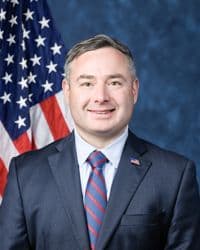
- Eugene Vindman
- Cosponsors
- None
- Introduced
- In Committee
What this bill would do
The Energy Utility Lobbying Ban Act seeks to impose restrictions on lobbying by former employees and officers of State regulatory authorities. To ensure these rules are followed, the bill conditions State energy program financial assistance on State compliance. If a State does not implement these restrictions, the Secretary of Energy shall withhold 10 percent of its financial assistance. States can achieve compliance through legislation, rulemaking, or binding orders. The Secretary is tasked with conducting annual reviews and maintaining a public database regarding State compliance status.
Yes· 3 of 4
Does this limit the influence of paid lobbyists?+8
The bill significantly curbs the influence of former state employees lobbying electric utilities.
Does this give the federal government more power?+7
The bill expands federal oversight by conditioning state energy funding on compliance with specific federal lobbying restrictions.
Does this make what the government does easier for the public to see?+5
The bill requires the Secretary to maintain a public database of state compliance status.
The opposite
Does this leave more decisions to the states?-5
The bill reduces state autonomy by imposing federal requirements and penalties on state energy programs.
Would business owners be better off under this?-4
Utility companies and their officers face new restrictions on their ability to advocate for their interests.
Does this protect the individual right to speak freely?-3
The bill restricts the future advocacy and professional activities of former state employees.
Who it would affect, and how
Potential Positive Impacts for People
-
Lobbying Restrictions: The bill requires States to prohibit former officers or employees of a State regulatory authority from advocating before that authority on behalf of electric utilities regarding specific matters they participated in personally and substantially (Section 2(a)(1)).
-
Time-Bound Restrictions: It prohibits former employees from advocating on matters they knew or should have known were pending under their official responsibility within one year before their termination (Section 2(a)(2)).
-
Enforcement Mechanisms: States are required to enforce these prohibitions by investigating complaints, imposing penalties, and allowing affected parties to seek recovery of damages (Section 2(a)(3)).
-
Transparency: The Secretary must maintain a public database that identifies the status of each State's compliance (Section 2(f)(1)(B)).
Potential Negative Impacts for People
-
Financial Withholding: The Secretary shall withhold 10 percent of the amount of State energy program financial assistance if a State does not comply with the required restrictions (Section 2(a)).
-
Compliance Burdens on States: States must implement legally binding mechanisms, such as legislation or administrative rulemaking, to achieve the required lobbying restrictions (Section 2(e)).
Groups and Interests Ranking
Every group the model scored this bill for, from -10 to +10. Hover a score for the reason it gave.
- Governance And Ideology
- Reduces Lobbying+8Increases Federal Power+7Improves Government Transparency+5Increase States Rights-5Improves Freedom Of Speech-3
- Economy And Finance
- Improves Consumer Protection+5
- Demographic And Interest Groups
- Good For Business Owners-4
- 8/10/2026
- Referred to the House Committee on Energy and Commerce.
- Introduced in House