Bill · H.R. 10064· House(119-HR-10064)
Foreign Service Language Readiness Act
- Introduced
- 8/6/2026
- Last activity
- 8/6/2026 — Referred to the House Committee on Foreign Affairs.
- Sponsored by
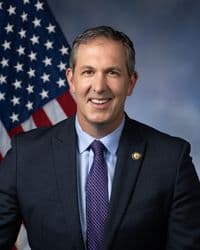
- Johnny Olszewski
- Cosponsors
- - 0 - 1
- Introduced
- In Committee
What this bill would do
This bill, known as the "Foreign Service Language Readiness Act," seeks to amend the Foreign Service Act of 1980. It requires the Secretary to create and maintain a list of critical foreign languages. This list must be updated at least once every three years and shared with specific House and Senate committees. The act mandates that the Secretary include proficiency levels and criteria for mission-essential positions in this list. Additionally, the Secretary is tasked with incorporating language planning into career development, training, and assignment processes. Finally, the Secretary must submit a report regarding the Department of State's critical language capabilities.
Yes· 3 of 5
Does this favour talking over confrontation abroad?+3
The bill strengthens diplomatic capacity through structured language training and a surge reserve of language-proficient personnel.
Does this strengthen ties with allied countries?+1
By ensuring language proficiency, the bill enhances the effectiveness of US diplomatic engagement and international relations.
Does this reduce what the federal government spends?+1
The bill encourages coordination across agencies to achieve cost savings to the taxpayer.
The opposite
No question was scored the opposite.
Who it would affect, and how
Potential Positive Impacts for People
-
Cost Savings to the Taxpayer: The Secretary is directed to coordinate with other Federal departments and agencies to avoid duplication and achieve cost savings (Section 2(a)(3)).
-
Improved Workforce Planning: The Secretary should incorporate language planning into training, career development, and assignment processes, which includes using the National Foreign Affairs Training Center (Section 2(a)(4)(A)).
-
Crisis Response Readiness: The bill suggests developing a surge reserve of rehired officers and cleared individuals with critical language skills to be activated rapidly during crises (Section 2(a)(4)(C)).
-
Protection of Interests: The designation of critical languages is aimed at protecting United States national security interests, economic prosperity, and the protection of United States citizens abroad (Section 2(a)(5)(A)).
Potential Negative Impacts for People
- No specific negative impacts are explicitly detailed in the provided text.
Groups and Interests Ranking
Every group the model scored this bill for, from -10 to +10. Hover a score for the reason it gave.
- National Security And Foreign Policy
- Improves Diplomatic Engagement+3Improves International Alliances+1
- Economy And Finance
- Improves Fiscal Responsibility+1Reduces Government Spending+1
- Governance And Ideology
- Improves Government Transparency+1
- 8/6/2026
- Referred to the House Committee on Foreign Affairs.
- 1 Cosponsor added.
- Introduced in House
 Michael Baumgartner
Republican · Washington