Bill · H.R. 10042· House(119-HR-10042)
Understanding AI in the Classroom Act
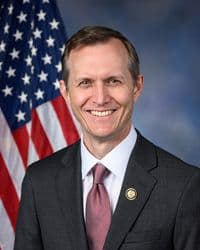
- Introduced
- 8/3/2026
- Last activity
- 8/3/2026 — Referred to the House Committee on Science, Space, and Technology.
- Sponsored by
- George Whitesides
- Cosponsors
- - 2 - 0
- Introduced
- In Committee
What this bill would do
This bill, known as the "Understanding AI in the Classroom Act," directs the Director of the National Science Foundation to complete specific workshops. These workshops are intended to identify gaps in data and published findings regarding how integrating artificial intelligence into classrooms might affect or harm children. The scope includes looking at attention spans, learning independence, and various developmental factors. The Director is also tasked with examining potential over-reliance on AI and differential effects based on age or vulnerabilities. Following the workshops, a report must be submitted to specific Congressional committees and published.
Yes· 3 of 6
Would children be better off under this?+5
The bill directly seeks to identify and mitigate potential harms to children's development caused by AI.
Would students be better off under this?+3
By researching the impacts of AI, the bill aims to protect the cognitive and emotional development of students.
Does this put more money into public schools?+2
The bill funds research workshops that can inform better educational practices and protect student well-being.
The opposite
No question was scored the opposite.
Who it would affect, and how
Potential Positive Impacts for People
-
Identification of potential harms: The workshops aim to identify gaps in data regarding effects on or harm to children, such as impacts on attention span, learning independence, and cognitive, social, emotional, or behavioral development (Section 2(a)).
-
Understanding AI reliance: The bill seeks to identify any over-reliance or trust miscalibration of artificial intelligence by children (Section 2(a)(3)).
-
Addressing differential effects: The workshops will look for differential effects based on age, specific vulnerabilities, or characteristics of the AI, such as sycophancy (Section 2(a)(4)).
-
Inclusive research process: The Director may seek participation from researchers, educators, school leaders, and parent groups to carry out these workshops (Section 2(b)).
Potential Negative Impacts for People
- No specific negative impacts are identified within the provided text.
Groups and Interests Ranking
Every group the model scored this bill for, from -10 to +10. Hover a score for the reason it gave.
- Demographic And Interest Groups
- Good For Children+5Good For Students+3
- Education And Technology
- Increases Public School Funding+2Increases Scientific Research Funding+2Increases Big Tech Regulation+1
- Governance And Ideology
- Improves Government Transparency+1
- 8/3/2026
- Referred to the House Committee on Science, Space, and Technology.
- 2 Cosponsors added.
- Introduced in House
 April McClain Delaney
Democrat · Maryland
 Andrea Salinas
Democrat · Oregon