Bill · H.R. 1000· House(119-HR-1000)
Cyber PIVOTT Act
- Introduced
- 2/5/2025
- Last activity
- 9/8/2025 — ASSUMING FIRST SPONSORSHIP - Mrs. Biggs (SC) asked unanimous consent that she may hereafter be considered as the first sponsor of H.R. 1000, a bill originally introduced by Representative Green (TN), for the purpose of adding cosponsors and requesting reprintings pursuant to clause 7 of rule XII. Agreed to without objection.
- Sponsored by
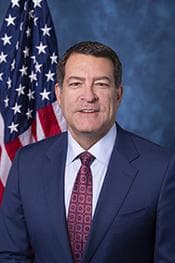
- Mark Green
- Cosponsors
- - 12 - 0
- Introduced
What this bill would do
This bill, known as the "Cyber PIVOTT Act," seeks to amend the Homeland Security Act of 2002. It establishes the PIVOTT Program to provide education and training resources through the Cybersecurity and Infrastructure Security Agency (CISA). The program creates partnerships with community colleges, technical schools, and other institutions of higher education offering two-year programs. Participating students receive full tuition scholarships and are required to complete specific skills-based exercises and internships. In exchange for these benefits, students must fulfill a two-year service obligation in a cyber role for a government entity or a State, local, Tribal, or territorial government. The goal is to build a skills-based cyber workforce through a structured pipeline of training and employment.
Yes· 3 of 7
Does this better protect the country from computer attacks?+8
The bill significantly enhances national cybersecurity capabilities through a trained workforce.
Would people in their twenties and thirties be better off under this?+7
Provides educational and career opportunities specifically targeting students in two-year programs.
Would students be better off under this?+7
The bill offers substantial financial benefits and career pathways for students in cyber programs.
The opposite
No question was scored the opposite.
Who it would affect, and how
Potential Positive Impacts for People
-
Financial Support for Education: Students participating in the Program receive full tuition scholarships that cover academic fees, lab fees, travel, lodging, per diem, stipends, and certification testing fees (Section 2(a)(1)(C)).
-
Career Development and Training: The program provides students with required skills-based exercises, such as laboratory work, hackathons, and industry training workshops, to prepare them for the workforce (Section 2(a)(3)(B)).
-
Guaranteed Internship Opportunities: The program coordinates with appropriate entities to place students in approved cyber or cyber-relevant internships, including opportunities within Federal departments or agencies (Section 2(a)(3)(D)(i)).
-
Pathways to Government Employment: The bill facilitates post-graduation Federal job opportunities and includes a voluntary Federal Government recruitment fair to help students find open cybersecurity positions (Section 2(a)(1)(A) and Section 2(a)(4)(B)).
-
Continued Learning Opportunities: Graduates may be eligible for vouchers to fund up to three private sector or academic cyber certification programs (Section 2(a)(5)(B)).
Potential Negative Impacts for People
-
Mandatory Service Obligations: Students who complete the program are required to fulfill a two-year service obligation in a cyber role for an executive agency or a State, local, Tribal, or territorial government (Section 2(a)(1)(D)(i)).
-
Financial Liability for Scholarships: Scholarship recipients may be held liable for the repayment of their awards if they fail to maintain academic standing, are dismissed for disciplinary reasons, withdraw from their program, or fail to fulfill their service obligations (Section 2(a)(1)(6)).
-
Debt Treatment: If a student is required to repay a scholarship, the amount may be treated as a Federal Direct Unsubsidized Stafford Loan, which includes interest accruing from the date the scholarship was awarded (Section 2(a)(6) and Section 2(a)(c)(2)).
Groups and Interests Ranking
Every group the model scored this bill for, from -10 to +10. Hover a score for the reason it gave.
- Demographic And Interest Groups
- Good For Students+7Good For Young Adults+7Good For Low Income Households+5
- National Security And Foreign Policy
- Improves Cybersecurity Defense+8
- Education And Technology
- Improves College Affordability+6
- Economy And Finance
- Increases Job Creation+5
- Governance And Ideology
- Increases Federal Power+2
- 9/8/2025
- ASSUMING FIRST SPONSORSHIP - Mrs. Biggs (SC) asked unanimous consent that she may hereafter be considered as the first sponsor of H.R. 1000, a bill originally introduced by Representative Green (TN), for the purpose of adding cosponsors and requesting reprintings pursuant to clause 7 of rule XII. Agreed to without objection.
- 2/26/2025
- Subcommittee on Cybersecurity and Infrastructure Protection Discharged
- Committee Consideration and Mark-up Session Held
- Ordered to be Reported by the Yeas and Nays: 17 - 8.
- 2/25/2025
- 1 Cosponsor added.
- 2/24/2025
- 1 Cosponsor added.
- 2/5/2025
- Referred to the Committee on Homeland Security, and in addition to the Committee on Education and Workforce, for a period to be subsequently determined by the Speaker, in each case for consideration of such provisions as fall within the jurisdiction of the committee concerned.
- Referred to the Subcommittee on Cybersecurity and Infrastructure Protection.
- 10 Cosponsors added.
- Introduced in House
 Sheri Biggs
Republican · South Carolina
 Mike Ezell
Republican · Mississippi
 Gabe Evans
Republican · Colorado
 Michael Guest
Republican · Mississippi
 Carlos Gimenez
Republican · Florida
 Tony Gonzales
Republican · Texas
 Andrew Garbarino
Republican · New York
 Clay Higgins
Republican · Louisiana
 John Moolenaar
Republican · Michigan
 August Pfluger
Republican · Texas
 Harold Rogers
Republican · Kentucky
 Dale Strong
Republican · Alabama