Bill · H.J.Res. 3· House(119-HJRES-3)
Proposing an amendment to the Constitution of the United States relative to balancing the budget.
- Introduced
- 1/3/2025
- Last activity
- 1/3/2025 — Referred to the House Committee on the Judiciary.
- Sponsored by
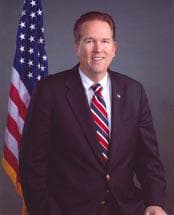
- Vern Buchanan
- Cosponsors
- - 1 - 0
- Introduced
- In Committee
What this bill would do
This joint resolution proposes an amendment to the Constitution to require a balanced budget. It mandates that total outlays not exceed total receipts and stay below 18 percent of the gross domestic product, unless Congress approves an excess by a two-thirds vote. The President must submit a budget that meets these specific financial limits. Additionally, any new or increased taxes would require a two-thirds majority vote in both Houses. The amendment also restricts increases to the national debt unless approved by a three-fifths vote.
Yes· 3 of 4
Does this make the government pay for what it commits to?+8
The bill imposes strict structural requirements to ensure a balanced budget and limits spending relative to GDP.
Does this reduce what the federal government spends?+7
The bill mandates that total outlays cannot exceed total receipts without a supermajority vote.
Does this reduce what the federal government owes?+6
The bill restricts the ability to increase the debt limit without a three-fifths majority vote.
The opposite· 3 of 9
Does this raise taxes on the highest earners?-5
The bill makes it harder to increase taxes by requiring a two-thirds majority for any tax rate increases.
Would households on low incomes be better off under this?-4
Reductions in government spending often disproportionately affect low-income populations.
Does this strengthen Social Security?-4
Strict spending caps and balanced budget requirements may limit future funding for social programs.
Who it would affect, and how
Potential Positive Impacts for People
-
Budgetary Limits: Section 1 requires that total outlays not exceed total receipts unless a two-thirds vote is held, which aims to ensure the government does not spend more than it takes in during a fiscal year.
-
Economic Safeguards: Section 2 limits total outlays to 18 percent of the gross domestic product of the previous year, providing a cap on spending relative to the size of the economy.
-
Presidential Accountability: Section 3 requires the President to transmit a proposed budget where outlays do not exceed receipts or the 18 percent GDP threshold.
-
Taxation Protections: Section 4 requires a two-thirds majority of members in each House by a rollcall vote for any bill that imposes a new tax or increases the statutory rate of any tax.
-
Debt Control: Section 5 prevents the increase of the limit on the debt of the United States unless three-fifths of the members of each House provide for it by a rollcall vote.
Potential Negative Impacts for People
-
Increased Legislative Hurdles for Revenue: Under Section 4, any bill that increases the statutory rate of any tax or the aggregate amount of revenue can only pass with a two-thirds majority by a rollcall vote.
-
Debt Increase Restrictions: Section 5 prevents the increase of the debt limit without a three-fifths majority vote by the duly chosen and sworn Members of each House.
-
Court Limitations: Section 8 prevents any court of the United States or any State from ordering an increase in revenue to enforce the provisions of this article.
Groups and Interests Ranking
Every group the model scored this bill for, from -10 to +10. Hover a score for the reason it gave.
- Economy And Finance
- Improves Fiscal Responsibility+8Reduces Government Spending+7Reduces National Debt+6Increases Wealthy Taxes-5
- Demographic And Interest Groups
- Good For High Income Households+3Good For Low Income Households-4Good For Seniors-3Good For Union Workers-3
- Social Issues And Justice
- Improves Social Security-4Improves Poverty Reduction-3
- Education And Technology
- Increases Public School Funding-3
- National Security And Foreign Policy
- Reduces Military Spending-3
- Governance And Ideology
- Increases Federal Power-2
- 6/11/2025
- 1 Cosponsor added.
- 1/3/2025
- Referred to the House Committee on the Judiciary.
- Introduced in House
 Randy Fine
Republican · Florida