Bill · H.Con.Res. 53· House(119-HCONRES-53)
Expressing support for the recognition of September 26, 2025, as "World Contraception Day" and expressing the sense of the House of Representatives regarding global and domestic access to contraception.
- Introduced
- 9/26/2025
- Last activity
- 9/26/2025 — Referred to the Committee on Energy and Commerce, and in addition to the Committee on Foreign Affairs, for a period to be subsequently determined by the Speaker, in each case for consideration of such provisions as fall within the jurisdiction of the committee concerned.
- Sponsored by
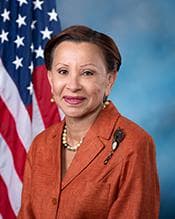
- Nydia Velázquez
- Cosponsors
- - 3 - 0
- Introduced
- In Committee
A concurrent resolution is how the House and the Senate settle something they do together, such as a budget plan or a joint session. It is adopted once both chambers agree to it, and that puts it into effect; it is not a law, so it does not go to the President.
What this bill would do
This concurrent resolution expresses the House of Representatives' support for recognizing September 26, 2025, as "World Contraception Day." It conveys the sense of the House regarding the necessity of both global and domestic access to contraception. The resolution urges Congress and the Trump administration to ensure universal, expansive, and high-quality access to free or affordable contraceptive options. It further calls for the protection of reproductive autonomy, the expansion of comprehensive sex education, and the elimination of reproductive health disparities. Additionally, it advocates for increased funding for various domestic and global family planning programs.
Yes· 3 of 20
Would women be better off under this?+8
The resolution focuses on expanding autonomy, insurance coverage, and healthcare access for people capable of pregnancy.
Does this make health care easier to get in general?+8
The resolution advocates for universal, expansive, and high-quality access to free or affordable contraception.
Would Native Americans be better off under this?+7
The resolution calls for increased funding for the Indian Health Service to improve contraceptive access for Native communities.
The opposite
No question was scored the opposite.
Who it would affect, and how
Potential Positive Impacts for People
-
Universal Access to Contraception: The resolution calls for ensuring all people have "universal, expansive, high-quality access to free or affordable contraception" (Section 1).
-
Bodily Autonomy and Decision Making: It seeks to ensure people capable of pregnancy can decide the number and spacing of their children through access to medically accurate information and health services (Section 2).
-
Increased Medical Training: The text advocates for expanding training for primary care physicians regarding the counseling and provision of highly effective reversible contraception methods (Section 5).
-
Improved Insurance Coverage: There is a call to ensure people have access to affordable, comprehensive, and consistent insurance coverage for reproductive health needs, including contraception without a prescription or cost sharing (Section 4).
-
Enhanced Education: The resolution supports the expansion of comprehensive and gender-inclusive sex education and patient-centered counseling (Section 10).
-
Reduction of Health Disparities: It urges efforts to end reproductive health disparities related to race, ethnicity, disability, immigration status, gender identity, and sexual orientation (Section 8).
-
Support for Global and Domestic Programs: The resolution supports additional funding for various programs, including Title X, Medicaid, the Indian Health Service, TRICAR, and the United States Agency for International Development (Section 12).
-
Expanded Access to Over-the-Counter Options: It calls for expanding access and coverage for over-the-counter birth control without requiring a prescription (Section 13).
Potential Negative Impacts for People
- No specific negative impacts or burdens for individuals or groups of people are explicitly listed or identified within the provided text.
Groups and Interests Ranking
Every group the model scored this bill for, from -10 to +10. Hover a score for the reason it gave.
- Demographic And Interest Groups
- Good For Women+8Good For Native Americans+7Good For African Americans+6Good For Low Income Households+6Good For Hispanic Americans+5Good For People With Disabilities+5Good For Young Adults+5Good For Immigrants+4Good For Children+2
- Social Issues And Justice
- Improves Racial Equity+7Improves Gender Equality+6Improves Disability Rights+5Improves L G B T Q Rights+5Improves Poverty Reduction+3
- Healthcare
- Improves Healthcare Access+8Increases Medicaid Funding+5Increases Affordable Care Act Support+4Improves Opioid Crisis Response+1
- National Security And Foreign Policy
- Increases Foreign Aid+5
- Economy And Finance
- Increases Job Creation+1
- 9/26/2025
- Submitted in House
- Referred to the Committee on Energy and Commerce, and in addition to the Committee on Foreign Affairs, for a period to be subsequently determined by the Speaker, in each case for consideration of such provisions as fall within the jurisdiction of the committee concerned.
- 3 Cosponsors added.
One bill Congress.gov lists as related to this one — companions in the other chamber, earlier versions, and bills this one absorbed or was folded into.
 Julia Brownley
Democrat · California
 Judy Chu
Democrat · California
 Suzan DelBene
Democrat · Washington