Bill · H.Con.Res. 20· House(119-HCONRES-20)
Establishing the Congressional Fitness Challenge, and for other purposes.
- Introduced
- 3/24/2025
- Last activity
- 3/24/2025 — Referred to the House Committee on House Administration.
- Sponsored by
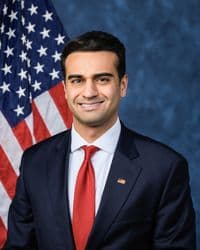
- Abraham Hamadeh
- Cosponsors
- - 8 - 0
- Introduced
- In Committee
A concurrent resolution is how the House and the Senate settle something they do together, such as a budget plan or a joint session. It is adopted once both chambers agree to it, and that puts it into effect; it is not a law, so it does not go to the President.
What this bill would do
This resolution establishes the Congressional Fitness Challenge, a national recognition program intended to promote physical fitness and personal achievement. The program utilizes voluntary, performance-based fitness tests including running, pull-ups, sit-ups, shuttle runs, and sit-and-reaches. Eligible participants are students aged 6 through 17, and tests must be administered by certified fitness professionals. Various entities, such as schools or Members of Congress, may act as sponsors. Participants who meet specific benchmarks can receive recognition at Gold, Silver, or Bronze levels.
Yes· 3 of 7
Would children be better off under this?+5
The challenge promotes physical fitness for students aged 6 through 17.
Would people with disabilities be better off under this?+5
The bill includes adaptive standards to ensure inclusion for participants with disabilities.
Would students be better off under this?+5
The program provides national recognition and achievement opportunities for students.
The opposite
Does this give people more control over their personal data?-2
The mandate to submit participant data to congressional committees creates potential privacy risks.
Does this protect people from being watched or searched?-2
Mandated data submission to committees poses a potential risk to the privacy rights of participants.
Does this give the government more power to monitor people inside the country?-2
The required data collection of participant information to committees could pose minor privacy/surveillance concerns.
Who it would affect, and how
Potential Positive Impacts for People
-
Promoting Fitness: The challenge is designed to promote physical fitness and personal achievement among eligible participants (Section 1).
-
Inclusivity for Students with Disabilities: The program includes adaptive standards for eligible participants with disabilities (Section 4).
-
Recognition of Achievement: Students who perform at or above specific benchmarks can receive certificates signed by high-level officials, including the Speaker of the House and the President pro tempore of the Senate (Section 6).
Potential Negative Impacts for People
-
Privacy and Liability Risks: The resolution notes a need for regulations to protect the privacy of participants and address liability risks for those who sponsor the events (Section 7).
-
Data Collection: Entities sponsoring the challenge are required to submit the data of all eligible participants to the covered committees (Section 5).
Groups and Interests Ranking
Every group the model scored this bill for, from -10 to +10. Hover a score for the reason it gave.
- Demographic And Interest Groups
- Good For Children+5Good For People With Disabilities+5Good For Students+5Good For Men+3Good For Women+3Good For Young Adults+3
- Social Issues And Justice
- Improves Disability Rights+5
- Education And Technology
- Improves Data Privacy-2
- Governance And Ideology
- Improves Privacy Rights-2
- National Security And Foreign Policy
- Increases Domestic Surveillance-2
- 6/4/2025
- 1 Cosponsor added.
- 5/5/2025
- 1 Cosponsor added.
- 4/24/2025
- 2 Cosponsors added.
- 4/10/2025
- 1 Cosponsor added.
- 4/8/2025
- 1 Cosponsor added.
- 3/27/2025
- 1 Cosponsor added.
- 3/25/2025
- 1 Cosponsor added.
- 3/24/2025
- Submitted in House
- Referred to the House Committee on House Administration.
 Nicholas Begich
Republican · Alaska
 Kimberlyn King-Hinds
Republican · Northern Mariana Islands
 Richard McCormick
Republican · Georgia
 Burgess Owens
Republican · Utah
 Marlin Stutzman
Republican · Indiana
 Elise Stefanik
Republican · New York
 Derrick Van Orden
Republican · Wisconsin
 Tony Wied
Republican · Wisconsin