Amendment · H.Amdt. 3· House of Representatives(119-HAMDT-3)
An amendment numbered 2 printed in House Report 119-1 to allow the U.S. Forest Service to approve the removal of hazardous trees near power lines on federal land without requiring a timber sale, easing a serious threat that has in the past been a major cause of destructive wildfires.
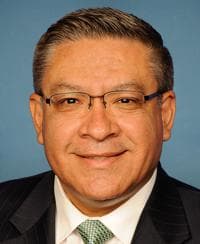
- Introduced
- 1/23/2025
- Last activity
- 1/23/2025 — On agreeing to the Carbajal amendment (A002) Agreed to by voice vote.
- Sponsored by
- Salud Carbajal
- Cosponsors
- None
- Changes bill
- 119-HR-471 — Fix Our Forests Act
- Introduced
- Passed House
- Adopted
What this amendment would do
H.R. 471, known as the Fix Our Forests Act, aims to reform and expedite forest management policies across National Forest System lands, Bureau of Land Management public lands, and Tribal lands.
Its purpose is to return resilience to overgrown, fire-prone forested areas by addressing emergency wildfire risks, expanding collaborative restoration tools, and reforming litigation processes.
The bill seeks to add and change current policy by:
- Designating high-risk fireshed management areas using state-of-the-art technology to prioritize and execute emergency hazardous fuels reduction projects.
- Establishing an interagency Fireshed Center to improve predictive services, data aggregation, and decision support regarding wildland fire and smoke.
- Expanding existing categorical exclusions up to 10,000 acres to streamline environmental reviews for necessary mitigation activities.
- Creating programs and initiatives focused on community wildfire risk reduction, utility right-of-way vegetation management, biochar development, and wildland firefighter casualty assistance.
Legislative Analysis
Folks, we all know the devastating toll that catastrophic wildfires have taken on our communities, homes, and families. When you look at the sheer destruction we've witnessed in places like California, it is clear that what we have been doing simply is not working.
Our local officials and brave firefighters are often left scrambling in the heat of an approaching blaze just to save neighborhoods, while our hands are tied by years of bureaucratic red tape and endless environmental reviews just to clear simple brush or thin out dead trees.
Now, our elected officials in Washington have a duty to look out for the good of the people and hold accountable the systems that have allowed our forests to become overgrown tinderboxes.
This legislation brings some common sense back to how we manage our public lands by cutting through unnecessary delays, allowing local land managers to act before disaster strikes, and helping to protect communities in the wildland-urban interface.
While there is always more work to be done to fully support our brave wildland firefighters and ensure our communities have the resources they need to recover, this bill takes a necessary step toward keeping our families, homes, and forests safe.
- 1/23/2025
- House amendment agreed to: On agreeing to the Carbajal amendment (A002) Agreed to by voice vote.
- House Amendment Offered
- Amendment (A002) offered by Mr. Carbajal. (consideration: CR H334-335; text: CR H334)
- On agreeing to the Carbajal amendment (A002) Agreed to by voice vote.
This bill has no cosponsors